
Multi-Conductor Terminal Blocks
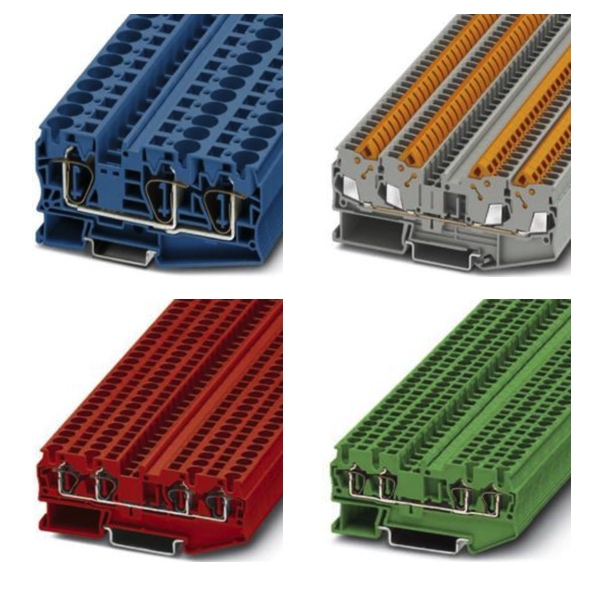
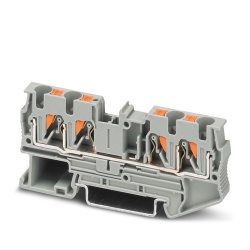
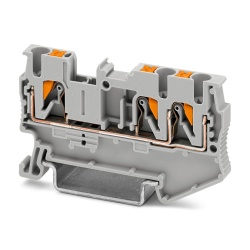
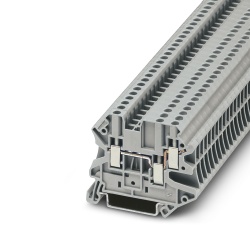
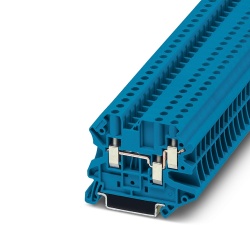
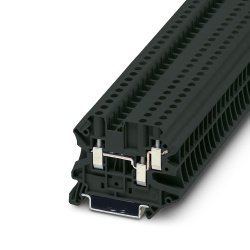
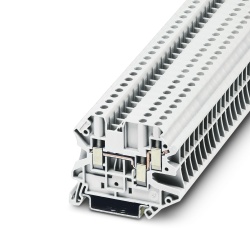
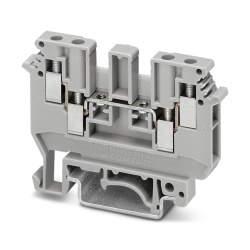
Phoenix Contact multi-conductor terminal blocks are available as feed-through multi-conductor terminal blocks, double-level terminal blocks, and multi-level terminal blocks in push-in, Push-X, and screw connection technologies with conductor cross-sections from 0.14mm² to 50mm², nominal voltages from 500V to 1000V, and current ratings from 22A to 125A for space-saving potential distribution in industrial control panels and distribution systems.
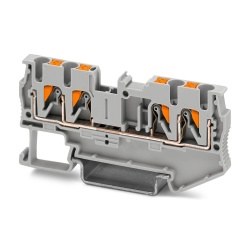
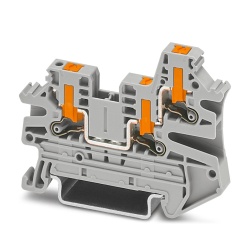
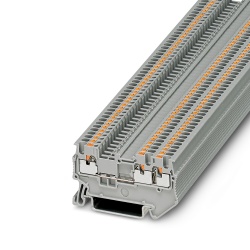
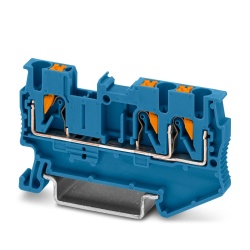
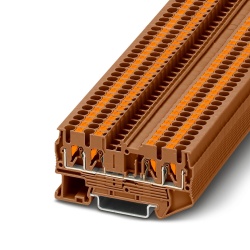
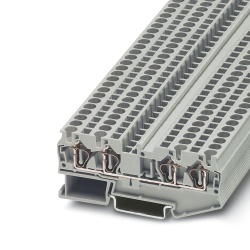
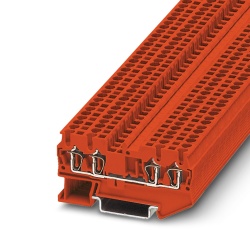
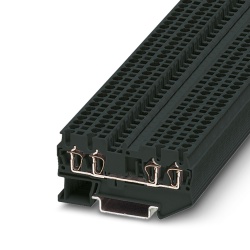
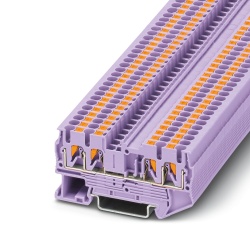
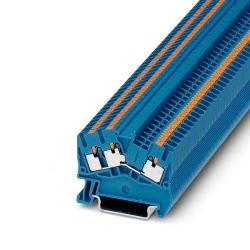
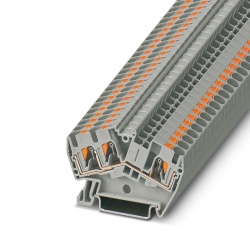
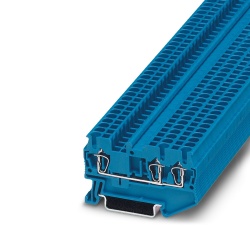
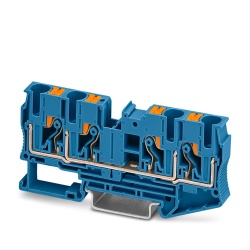
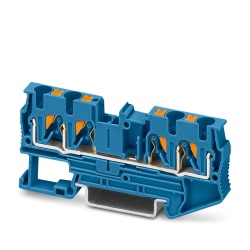
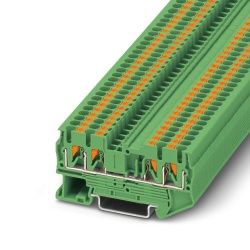
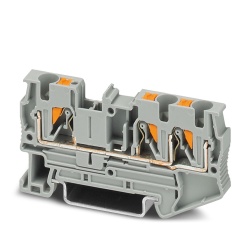
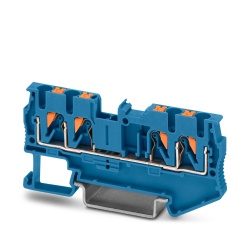
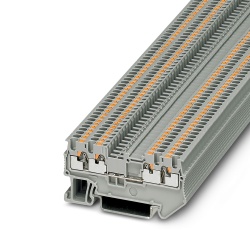
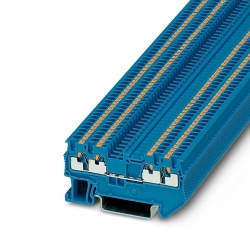
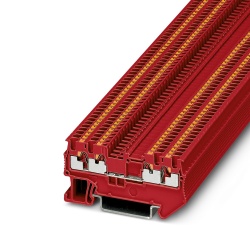
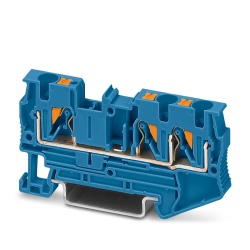
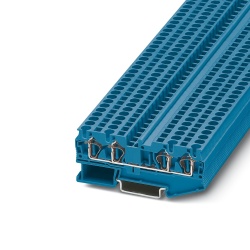
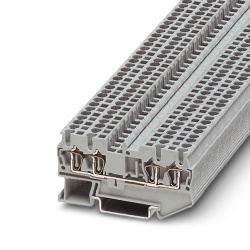
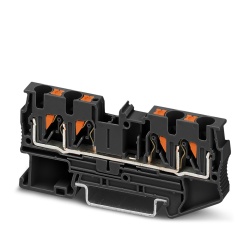
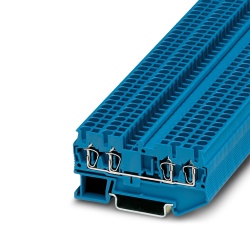
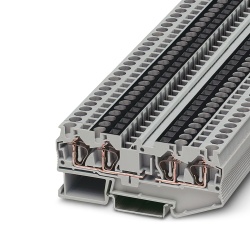
Multi-conductor terminal blocks are designed to simplify wiring by allowing multiple conductors to be connected within a single compact housing. Unlike standard feed-through terminal blocks that support one conductor per side, Phoenix Contact multi-conductor terminal blocks accommodate three or four connections routed via the same current bar, allowing potential distribution across multiple circuits and reducing the total number of terminal blocks and supply lines required. The PT 2.5-TWIN push-in multi-conductor terminal block supports three connections at 24A and 800V with conductor cross-sections from 0.14mm² to 4mm² on NS 35/7.5 and NS 35/15 DIN rail.
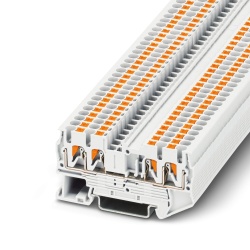
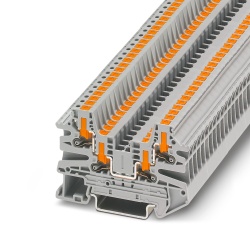
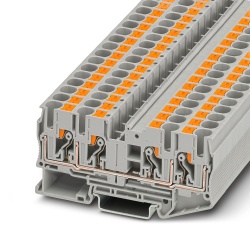
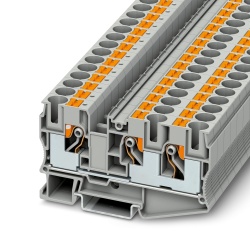
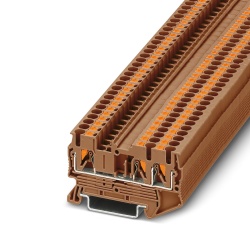
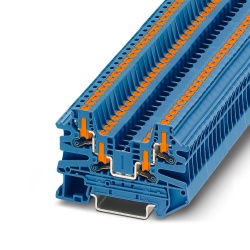
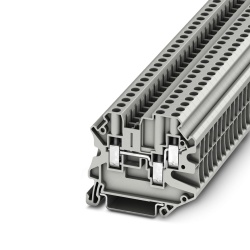
Phoenix Contact double-level terminal blocks, such as the PTTB 2.5, provide two feed-through terminal blocks in one housing, with each level carrying its own potential at 22A and 500V with push-in connections from 0.14mm² to 4mm². Levels can be quickly connected with vertical PV bridges to function as multi-conductor terminal blocks, and versions with permanently integrated PV bridging eliminate manual bridging entirely. Double-level terminal blocks with lateral conductor connection feature offset levels for unhindered access to the lower connection, even when fully wired.
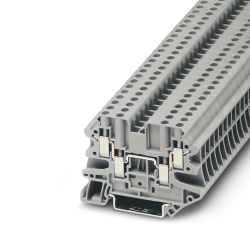
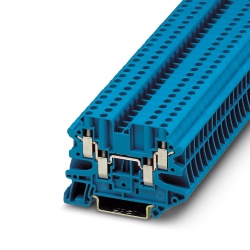
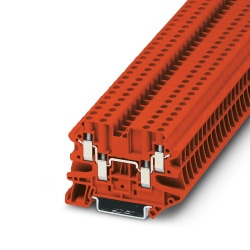
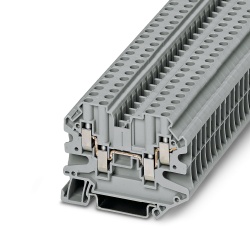
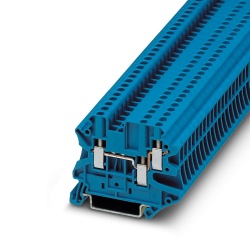
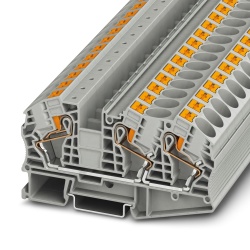
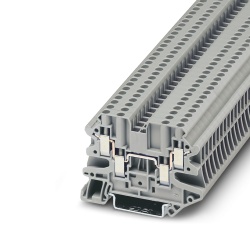
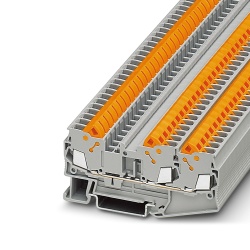
Multi-level terminal blocks with three or four levels extend wiring density further, with function levels incorporating disconnect zones for knife disconnection or universal disconnect connectors. Special motor terminal versions support space-saving three-phase motor connections with phase bridging options on each level. UT Series screw connection feed-through terminal blocks are available in 4mm² at 32A, and 35mm² at 125A rated cross-sections at 1000V nominal voltage, while XT Series Push-X terminal blocks and PT Series push-in terminal blocks cover conductor sizes from 0.14mm² to 10mm² across multiple current ratings. Al/Cu terminal blocks accommodate both aluminum and copper conductors in a single terminal block for universal conductor material compatibility.
All Phoenix Contact multi-conductor and multi-level terminal blocks use the standardized bridging, marking, and test accessories of the CLIPLINE complete system, reducing logistics costs and supporting clear circuit identification across the full terminal strip.
FAQs
Q: What is a Phoenix Contact multi-conductor terminal block?
Phoenix Contact multi-conductor terminal blocks are feed-through terminal blocks with three or four connections routed via the same current bar, allowing multiple conductors to be connected within a single housing for efficient potential distribution and reduced terminal block count in control panels.
Q: What is the difference between double-level and multi-level terminal blocks?
Double-level terminal blocks provide two feed-through levels in one housing, each carrying its own potential that can be connected with PV bridges. Multi-level terminal blocks extend this to three or four levels, with optional function levels featuring disconnect zones and special motor terminal versions for three-phase connections.
Q: What connection technologies are available in Phoenix Contact feed-through and multi-conductor terminal blocks?
Phoenix Contact offers push-in connection in the PT series, Push-X connection in the XT series, and screw connection in the UT series, covering conductor cross-sections from 0.14mm² to 50mm² at nominal voltages from 500V to 1000V for universal control panel and distribution wiring applications.
Q: Can Phoenix Contact double-level terminal blocks be used as multi-conductor terminal blocks?
Yes. Double-level terminal blocks can be quickly connected across levels using vertical PV bridges to distribute potential across all connections, and versions with permanently integrated PV bridging eliminate manual bridging to reduce wiring time.
Q: Are Phoenix Contact multi-conductor terminal blocks compatible with CLIPLINE complete accessories?
Yes. All Phoenix Contact feed-through, multi-conductor, double-level, and multi-level terminal blocks use the standardized bridging, marking, and test accessories of the CLIPLINE complete system, supporting consistent panel organization and reducing logistics costs across the terminal strip.
Why Buy Multi-Conductor Terminal Blocks from RSP Supply
RSP Supply offers a dependable selection of multi-conductor terminal blocks designed for efficient, space-saving wiring in industrial control and distribution panels. Our solutions support modular system design, reliable electrical performance, and clear organization. Customers rely on RSP Supply for quality terminal block solutions, technical expertise, and components built to meet the demands of modern panel construction.