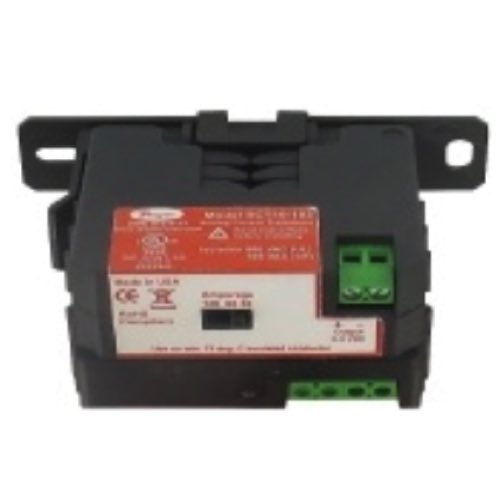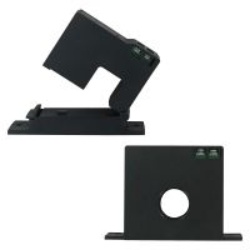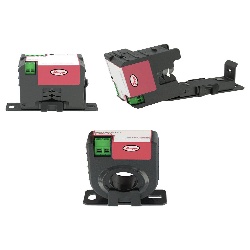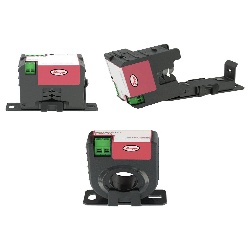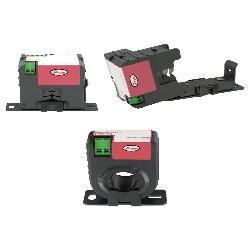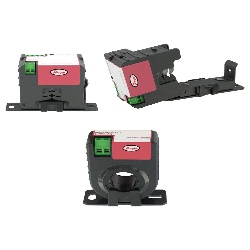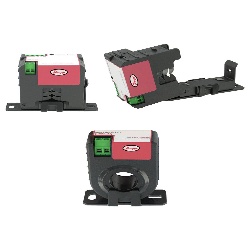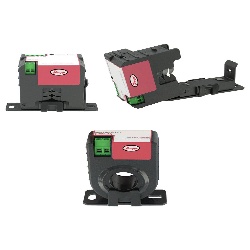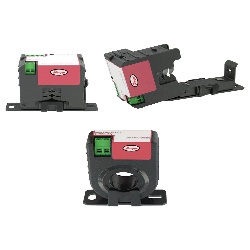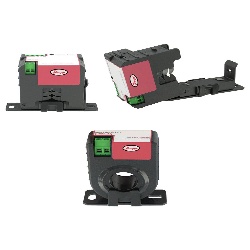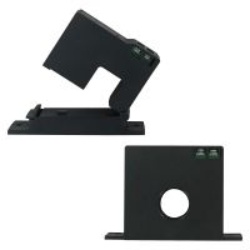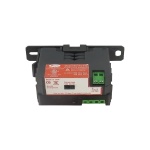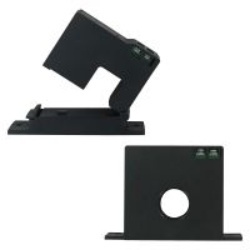
Dwyer Current Sensors

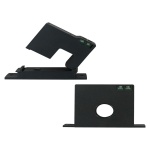
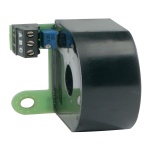
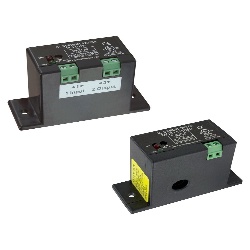
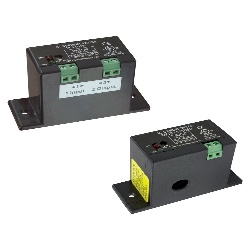
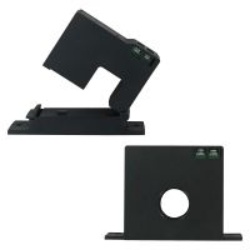
Dwyer current sensors are designed for reliable and accurate fixed threshold and adjustable setpoint monitoring of AC electrical loads in HVAC, building automation, and industrial control applications. Dwyer split-core and solid-core current sensors enable detection of equipment status, verification of energy consumption, operator alert, and early identification of abnormal current signatures before they result in system failure.

Current sensors from Dwyer Instruments provide dependable performance and straightforward installation in applications where load supervision and monitoring are required. Dwyer instruments are repeatedly selected not only for their cost efficiency, but also for their accuracy, reliability and versatility. Their reliability and versatility have made Dwyer a trusted choice in commercial buildings, manufacturing facilities, and energy-management applications.

Found 44 items
Filters
Found 44 items
Manufacturer
Dwyer Instruments (44)
Component
Current Sensor (23)
Current Switch (15)
Current Transducer (3)
Current Transformer (1)
Miniature Current Switch (2)
(Instrument-Sensor) Temperature Range
-22 - 158°F/-30 - 70°C (6)
5 - 140°F/-15 - 60°C (8)
32 - 122°F/0 - 50°C (2)
Normally In Stock
Dwyer MSCS-220015 Current Switch
Free U.S Ground shipping
$97.84
$81.53
Normally In Stock
Dwyer CCS-231150 Current Switch
Free U.S Ground shipping
$42.44
$35.37
Normally In Stock
Dwyer CCS-121050 Current Switch
Free U.S Ground shipping
$28.01
$23.34
Normally In Stock
Dwyer CCS-131100 Current Switch
Free U.S Ground shipping
$34.16
$28.47
Normally In Stock
Dwyer CCS-211150 Current Switch
Free U.S Ground shipping
$42.44
$35.37
Normally In Stock
Dwyer CCS-221100 Current Switch
Free U.S Ground shipping
$38.02
$31.68
Normally In Stock
Dwyer MCS-111001 Miniature Current Switch
Free U.S Ground shipping
$33.60
$28.00
Normally In Stock
Dwyer MCS-111050 Miniature Current Switch
Free U.S Ground shipping
$33.60
$28.00
Normally In Stock
Dwyer CCS-111100 Current Switch
Free U.S Ground shipping
$34.16
$28.47
Normally In Stock
Dwyer SCS-111100 Current Switch
Free U.S Ground shipping
$121.93
$101.61
Normally In Stock
Dwyer SCS-111100-R Current Switch
Free U.S Ground shipping
$152.89
$127.41
Normally In Stock
Dwyer SCS-120025 Current Switch
Free U.S Ground shipping
$87.19
$72.66
Normally In Stock
Dwyer SCS-211125 Current Switch
Free U.S Ground shipping
$121.93
$101.61
Normally In Stock
Dwyer SCS-211125-R Current Switch
Free U.S Ground shipping
$182.64
$152.20
Normally In Stock
Dwyer SCS-220015 Current Switch
Free U.S Ground shipping
$104.29
$86.91
Normally In Stock
Dwyer SCS-220150 Current Switch
Free U.S Ground shipping
$102.82
$85.68
Normally In Stock
Dwyer SCS-220150-R Current Switch
Free U.S Ground shipping
$165.85
$138.21
Normally In Stock
Dwyer SCT10-100 Current transducer
Free U.S Ground shipping
$180.85
$150.71
Normally In Stock
Dwyer SCT10-102 Current transducer
Free U.S Ground shipping
$148.73
$123.94
Normally In Stock
Dwyer LTTJ-305 Transformer
Free U.S Ground shipping
$170.28
$141.90
Normally In Stock
Dwyer LTTJ-305S Transformer
Free U.S Ground shipping
$192.65
$160.54
Normally In Stock
Dwyer LTTJ-103S Transformer
Free U.S Ground shipping
$192.65
$160.54
Normally In Stock
Dwyer LTTJ-103 Transformer
Free U.S Ground shipping
$170.28
$141.90
Normally In Stock
Dwyer LTTJ-100 Transformer
Free U.S Ground shipping
$170.28
$141.90
Normally In Stock
Dwyer LTTJ-090 Transformer
Free U.S Ground shipping
$170.28
$141.90
Normally In Stock
Dwyer LTTJ-070 Transformer
Free U.S Ground shipping
$170.28
$141.90
Normally In Stock
Dwyer LTTJ-030 Transformer
Free U.S Ground shipping
$170.28
$141.90
Normally In Stock
Dwyer LTTJ-020 Transformer
Free U.S Ground shipping
$172.64
$143.87
Normally In Stock
Dwyer LTTJ-010 Transformer
Free U.S Ground shipping
$170.28
$141.90
Normally In Stock
Dwyer CCT70-200 Transformer
Free U.S Ground shipping
$73.66
$61.38
Normally In Stock
Dwyer CCT70-100 Transformer
Free U.S Ground shipping
$91.93
$76.61
Normally In Stock
Dwyer CCT60-200 Transformer
Free U.S Ground shipping
$73.66
$61.38
Normally In Stock
Dwyer CCT60-100 Transformer
Free U.S Ground shipping
$91.93
$76.61
Normally In Stock
Dwyer CCT50-203 Transformer
Free U.S Ground shipping
$39.17
$32.64
Normally In Stock
Dwyer CCT50-200 Transformer
Free U.S Ground shipping
$48.60
$40.50
Normally In Stock
Dwyer CCT50-102 Transformer
Free U.S Ground shipping
$58.33
$48.61
Normally In Stock
Dwyer CCT50-100 Transformer
Free U.S Ground shipping
$58.92
$49.10
Normally In Stock
Dwyer CCT40-203 Transformer
Free U.S Ground shipping
$39.17
$32.64
Normally In Stock
Dwyer CCT40-202 Transformer
Free U.S Ground shipping
$39.17
$32.64
Normally In Stock
Dwyer CCT40-200 Transformer
Free U.S Ground shipping
$48.60
$40.50
Normally In Stock
Dwyer CCT40-102 Transformer
Free U.S Ground shipping
$58.33
$48.61
Normally In Stock
Dwyer CCT40-100 Transformer
Free U.S Ground shipping
$58.33
$48.61
Normally In Stock
Dwyer CCT50-202 Current Transformer
Free U.S Ground shipping
$39.17
$32.64
Normally In Stock
Dwyer SCT20-103 Current transducer
Free U.S Ground shipping
$151.12
$125.93

FAQs

What are Dwyer current sensors used for in HVAC and building automation systems?

Dwyer current sensors are used to monitor the electrical load of motors, fans, pumps, compressors, and lighting circuits to verify that equipment is running as commanded by a building automation system. By providing real-time current measurement, they help detect equipment failure, prevent unnoticed downtime, and ensure that HVAC systems operate efficiently. This makes them essential for maintaining comfort, reducing energy waste, and supporting preventative maintenance programs in commercial buildings.

How do Dwyer current sensors improve energy efficiency and system performance?

Dwyer current sensors supply precise load data that allows BAS controllers and energy-management systems to optimize equipment operation. By monitoring current draw, these sensors identify excessive energy use, failing motors, blocked airflow, and improper equipment cycling. Facility managers can use this information to adjust schedules, troubleshoot inefficiencies, and implement energy-saving strategies that reduce operational costs and extend equipment lifespan.

Are Dwyer current sensors easy to install in existing electrical systems?

Yes, many Dwyer models are specifically designed for fast, non-invasive installation, especially split-core sensors that clamp around existing conductors without disconnecting power. Their compact housings, adjustable setpoints, and visual status indicators make installation simple for contractors and technicians. This allows upgrades or retrofits to be completed quickly while minimizing system interruptions.

What makes Dwyer current sensors reliable in industrial and commercial environments?

Dwyer designs its current sensors to withstand real-world conditions such as vibration, electrical noise, temperature changes, and varying load profiles. Their stable sensing elements and durable housings maintain accuracy over long service periods, reducing false alarms and ensuring consistent performance. This reliability is crucial for environments where sensor failure could impact building comfort, process control, or energy reporting.

How do Dwyer current sensors integrate with PLCs, BAS controllers, and energy-management systems?

Most Dwyer current sensors offer industry-standard output signals, including solid-state switches, analog outputs, and relay contacts that interface directly with PLCs, building automation systems, and energy dashboards. This flexibility allows engineers to incorporate Dwyer sensors into both new construction and legacy systems without rewiring or adding conversion hardware. The result is seamless data flow for equipment monitoring and automated control.

 Analog and Digital Control Signals: The Basics

Digital Signals

Digital signals are represented in either a true or false. There is no gray area with digital signals. An example of this might be a light switch. A light switch is either on or off. Another example of this might be a motor that is running or not running. Digital signals can be generated with both AC and DC circuits with varying voltages, currents and resistance. Some practical examples of using digital signals in an industrial environment might be if a pump is running or not running or a whether a valve is open or closed.

Analog Signals

Analog signals convey information in the form of a range. A light switch might be on or off as a digital signal, but a dimmer switch would be an analog signal. It can be on or off, but it can also be somewhere in between. A practical example of using analog signals in an industrial environment would be if there is a need to measure the level of a tank; whether it's full, empty or somewhere in between. Analog signals can take many different forms with some of the more common being a 4 to 20 milliamp signal or a 0 to 5 or 0 to 10 volt signal. 
Communication

Communication in a device can either be sent or received. Whether that data is sent or received depends on the type of information. Is there a need to monitor the status of something? If so, an input needs to be received about that information. Is there a need to control something? If so, an output needs to be sent about what needs to occur. Receiving inputs and setting outputs are both things that can be accomplished by using both digital and analog signal types. Therefore, the signals are referred to as analog outputs (AO), analog inputs (AI), digital inputs (DI) or digital outputs (DO).