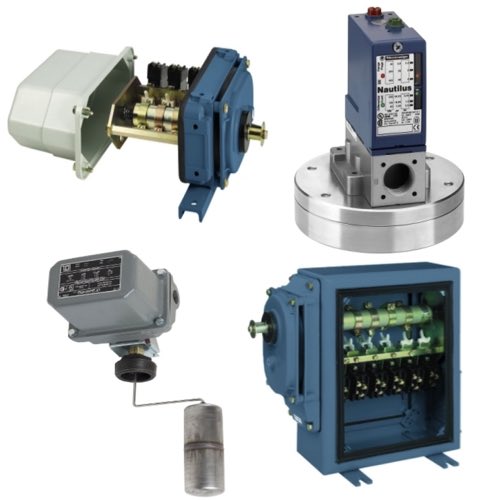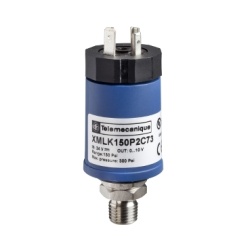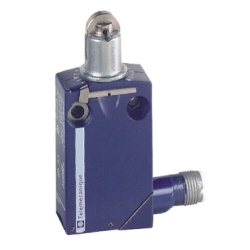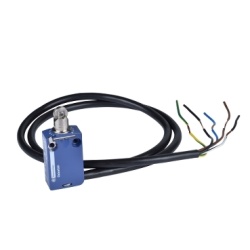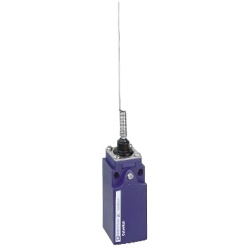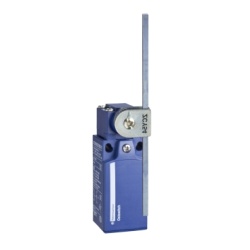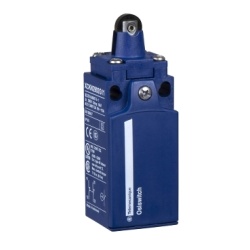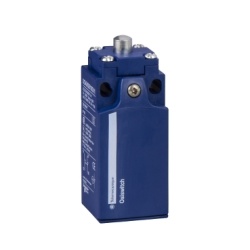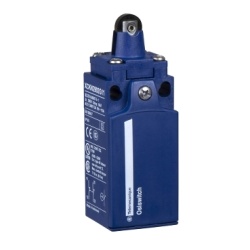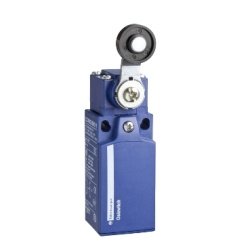

Telemecanique Instrumentation

Telemecanique has a well-established reputation in the automation world as a manufacturer of reliable, high-quality sensors, switches, and safety devices for industrial use. As a wholly owned subsidiary of industrial giant Schneider Electric, Telemecanique has its manufacturing and design facilities spread across several countries, primarily in Europe. Nowadays Telemecanique is mostly known for its products in the North American and international markets.

Telemecanique focuses on making electronic and electromechanical devices that are simple to install, easy to integrate into an automated control scheme, and able to perform well in demanding environments. Its product line runs the gamut from "sensing solutions"—in particular, proximity sensors and photoelectric sensors—to limit switches, control switches, and safety devices that users can employ to meet the kind of regulatory standards that any company must adhere to.
Found 1260 items
Filters
Found 1260 items
Manufacturer
Telemecanique (1260)
Component
Electromechanical Pressure Sensor (129)
Electromechanical Pressure Switch (137)
Electromechanical Vacuum Sensor (1)
Electromechanical Vacuum Switch (2)
Electromechanical Vacuum-Pressure Sensor (1)
Electronic Pressure Sensor (276)
Float Switch (74)
Limit Switch (610)
(Instrument-Sensor) Application
Adjustable Differential (51)
ATEX D (15)
Belt Conveyor Switch (10)
Cable Pull Switch (4)
Closed Tank (53)
Condensation Pump (1)
Control Electrically Driven Water Pumps (11)
Control Electrically Driven Water Pumps And Air Compressors (2)
Control Small Electrically Driven Air Compressors (1)
Detection Of 1 Single Threshold (83)
(Instrument-Sensor) Connection Type
0.44" 20 UNF-2B (2)
1/4" 18 NPTF (1)
Cable (1)
Cable 2 M (1)
DEUTSCH Connector DT04-3P 3 Pins (14)
Female Connector (15)
Female Connector 1/4" 18 NPT (36)
Female Connector G1/4 (68)
Female Connector G1/4 (Female) (18)
Female Connector M12 2 Pins (6)
(Instrument-Sensor) Contact Configuration
1 C/O (119)
1 NC + 1 NC (4)
1 NC + 1 NO (445)
1 NO (1)
2 C/O (17)
2 NC (101)
2 NC + 1 NO (11)
2 NC + 2 NO (1)
2 NC/NO (33)
2 NO (28)
(Instrument-Sensor) For Use With
For Closed Tank (53)
For Open Tank Or Sump (20)
(Instrument-Sensor) Hazardous Location Class
Zone 21 (14)
Zone 22 (14)
(Instrument-Sensor) Indication
1 Clear LED (1)
1 Clear Neon (4)
1 Red LED (4)
1 Red Neon (3)
Indicator Light Module (1)
With (15)
With External Pointer (47)
With Range Scale Window (12)
Without (143)
(Instrument-Sensor) IP Protection
IP20 (16)
IP43 (2)
IP54 (33)
IP65 (393)
IP66 (512)
IP67 (568)
IP68 (74)
IP69 (19)
IP69K (86)
(Instrument-Sensor) Measurement Response Time
< 2 Ms (22)
< 5 Ms (18)
<= 2 Ms 10 - 90 % Of Full Scale (118)
<= 2 Ms 92 % Of Full Scale (5)
<= 3 Ms For Analog Output (4)
<= 3 Ms For Discrete Output (6)
<= 5 Ms For Discrete Output (93)
<= 10 Ms For Analog Output (83)
0.1 M/S (10)
0.3 M/S (14)
(Instrument-Sensor) Medium
Air (463)
Air (0 - 70 °C) (15)
Corrosive Fluid (116)
Fresh Water (424)
Hydraulic Oil (533)
Hydraulic Oil (0 - 70 °C) (15)
Non-Corrosive Fluid (114)
Non-Corrosive Gas (114)
Sea Water (82)
Water (0 - 70 °C) (15)
(Instrument-Sensor) Mounting
By 2 Screws (9)
By The Body (507)
By The Head (36)
(Instrument-Sensor) NEMA Protection
NEMA 1 (118)
NEMA 2 (51)
NEMA 4 (205)
NEMA 4X (94)
NEMA 7 (17)
NEMA 9 (17)
NEMA 12 (52)
NEMA 13 (146)
(Instrument-Sensor) Number of Poles
1 Pole (44)
2 Pole (512)
3 Pole (23)
4 Pole (44)
(Instrument-Sensor) Output Signal Range
0 - 10 V (75)
0.5 - 4.5 V (23)
4 - 20 mAmp (151)
(Instrument-Sensor) Output Signal Type
Adjustable (102)
Analog (250)
By 30° Cam (331)
By Any Moving Part (60)
By Conveyor Belt (3)
By Specific Cam (1)
CCW (17)
CW (20)
CW And CCW (22)
Differential (108)
(Instrument-Sensor) Size
Compact Range (3)
(Instrument-Sensor) Span
-1 - 0 Bar (5)
-1 - 1 Bar (1)
-1 - 5 Bar (1)
-1 - 9 Bar (1)
-1 - 25 Bar (1)
-99.97 - 0.00 Kpa (7)
-99.97 - 103.42 Kpa (1)
-99.97 - 413.69 Kpa (2)
0 - 0.5 Bar (1)
0 - 0.25 Bar (2)
(Instrument-Sensor) Standards
ANSI 61 (118)
ANSI 372 (2)
CE (313)
CSA C22.2 (230)
IEC 60204 (501)
IEC 60337 (6)
IEC 60947 (549)
UL 508 (835)
UL 61010 (122)
(Instrument-Sensor) Supply Voltage
5 VDC SELV (23)
12 - 24 VDC SELV (58)
12 VDC (16)
24 VDC (22)
24 VDC SELV (173)
(Instrument-Sensor) Temperature Range
-12 - 85 °C (2)
-15 - 85 °C (22)
-18 - 177 °C (19)
-20 - 60 °C (30)
-20 - 80 °C (106)
-23 - 85 °C (162)
-25 - 55 °C (10)
-25 - 70 °C (663)
-29 - 49 °C (4)
-30 - 85 °C (108)
(Instrument-Sensor) Type
Compact (3)
Form A Conforming To CENELEC EN 50041 (2)
Form B Conforming To CENELEC EN 50041 (1)
Form C Conforming To CENELEC EN 50041 (1)
Form D Conforming To CENELEC EN 50041 (1)
Linear (272)
Miniature (5)
Multi-Directional (30)
Rotary (230)
(Instrument-Sensor) Type of Operator
Diaphragm (192)
Lever (294)
NPN (38)
Piston (78)
Plunger (273)
Plunger Head (6)
PNP (61)
Roller (374)
Rotary Head (9)
Simultaneous (12)
Normally In Stock
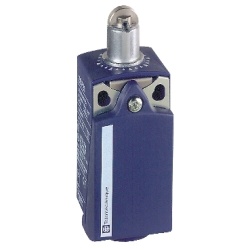
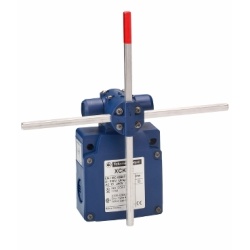
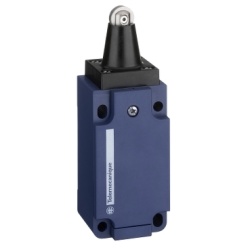
Schneider XCKJ3967H29EX Plunger head 3 Pole Limit switch
Free U.S Ground shipping
$189.08
$157.57

FAQs

What does Telemecanique specialize in?

Telemecanique focuses on sensors, switches, limit switches, safety devices, and industrial control products used across automation and machinery.
What types of sensors does Telemecanique offer?

They manufacture proximity sensors, photoelectric sensors, ultrasonic sensors, pressure switches, and safety sensors for various detection needs.

Do Telemecanique products integrate with PLCs and automation systems?

Yes. Most devices offer industry-standard outputs and wiring formats that integrate seamlessly with PLCs, controllers, and safety systems.

Does Telemecanique make safety devices?

They offer emergency stop switches, interlock switches, safety limit switches, and other components that help meet global safety standards.

Are Telemecanique and Schneider Electric related?

Yes. Telemecanique is a Schneider Electric brand, benefiting from their engineering, quality standards, and global support network.

Analog and Digital Control Signals: The Basics

Digital Signals

Digital signals are represented in either a true or false. There is no gray area with digital signals. An example of this might be a light switch. A light switch is either on or off. Another example of this might be a motor that is running or not running. Digital signals can be generated with both AC and DC circuits with varying voltages, currents and resistance. Some practical examples of using digital signals in an industrial environment might be if a pump is running or not running or a whether a valve is open or closed.

Analog Signals

Analog signals convey information in the form of a range. A light switch might be on or off as a digital signal, but a dimmer switch would be an analog signal. It can be on or off, but it can also be somewhere in between. A practical example of using analog signals in an industrial environment would be if there is a need to measure the level of a tank; whether it's full, empty or somewhere in between. Analog signals can take many different forms with some of the more common being a 4 to 20 milliamp signal or a 0 to 5 or 0 to 10 volt signal. 

Communication

Communication in a device can either be sent or received. Whether that data is sent or received depends on the type of information. Is there a need to monitor the status of something? If so, an input needs to be received about that information. Is there a need to control something? If so, an output needs to be sent about what needs to occur. Receiving inputs and setting outputs are both things that can be accomplished by using both digital and analog signal types. Therefore, the signals are referred to as analog outputs (AO), analog inputs (AI), digital inputs (DI) or digital outputs (DO).