

IEC Control Units
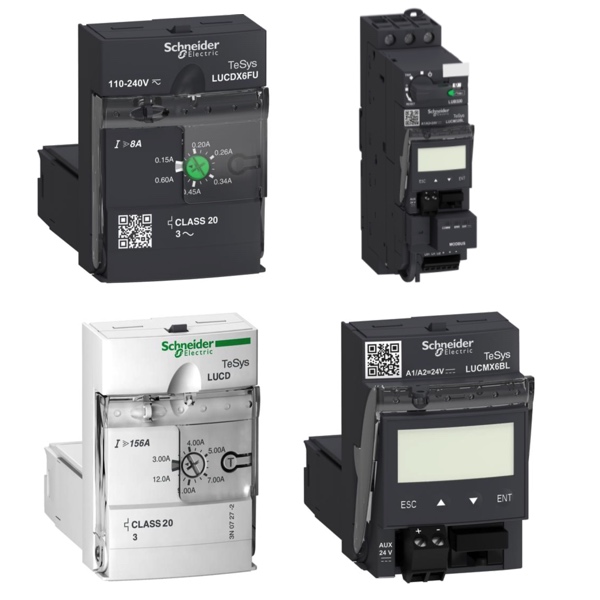
IEC control units are modular components used with IEC motor starter systems to provide control functionality, overload protection features, and application-specific options in a compact, panel-friendly format. In many installations, control units are paired with a power base or contactor/overload assembly to support safe motor operation, simplify panel layouts, and reduce wiring between devices when compared to field-assembled starter and disconnect combinations.
Modern motor control circuits typically rely on coordinated protective and switching devices. A branch circuit protective device (such as a circuit breaker) protects the feeder and downstream equipment, while a contactor enables remote switching of the motor, and an overload relay protects against sustained overcurrent conditions. If an overload event is detected, the overload relay opens the control circuit so the contactor drops out and removes power from the motor. For applications requiring reduced inrush current or adjustable speed, soft starters and variable frequency drives (VFDs) add ramping and speed control capabilities while maintaining protective functions.
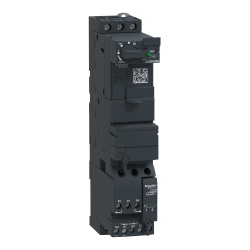
Many IEC starter platforms are designed to be flexible and modular, allowing contactors, auxiliary blocks, and overload relay blocks to be selected to match motor and control requirements. Components are often tool-free and can be assembled quickly, with options for panel mounting or DIN rail mounting (commonly 35 mm), supporting efficient build practices and straightforward serviceability. For example, modular combination starter systems may use a dedicated power base with a plug-in control unit that provides control logic and thermal overload functions, with additional plug-in modules available when expanded functionality or network communication is required.
FAQs
Q: What is an IEC control unit used for?
An IEC control unit is used as part of a modular motor starter system to provide control functions and, depending on the design, overload protection features and additional functionality such as advanced diagnostics or communication support.
Q: What’s the difference between standard, advanced, and multifunction control units?
Standard control units typically support core starter operation and basic protection features. Advanced and multifunction versions may add wider adjustment ranges, diagnostics, status signaling, configurable inputs/outputs, or integration features intended for more complex control schemes.
Q: How do contactors and overload relays work together in motor control?
The contactor switches power to the motor using a low-power control signal. The overload relay monitors motor current and, if a sustained overcurrent condition occurs, it opens the control circuit to de-energize the contactor and shut the motor off.
Q: What is a combination motor starter?
A combination motor starter integrates motor control, overload protection, and a disconnecting means within a single assembly or enclosure. This helps streamline installation by reducing inter-device wiring and simplifying panel layout.
Q: When should I use a soft starter or VFD instead of a starter with an overload relay?
Soft starters are commonly used when reducing inrush current and mechanical stress at startup is important. VFDs are used when both soft starting and speed control are required, such as with pumps, fans, conveyors, and other variable-load applications.
Q: Are IEC starter components modular and field-configurable?
Many IEC starter platforms are modular, allowing contactors, auxiliary contact blocks, overload relay blocks, and control units to be selected and assembled based on the application. This can simplify part selection, reduce downtime, and support standardized panel designs.
Why Buy IEC Control Units: Standard, Advanced & Multifunction Control Units from RSP Supply
RSP Supply offers a focused selection of IEC control units designed to support modular motor starter systems across a range of industrial applications. Customers use these components to standardize motor control assemblies, simplify panel builds, and match starter functionality to specific motor and control requirements. Our product selection and support help maintenance teams, panel builders, and OEMs identify compatible configurations for reliable motor starting, protection, and control in demanding environments.