

IEC Non-Reversing Contactors
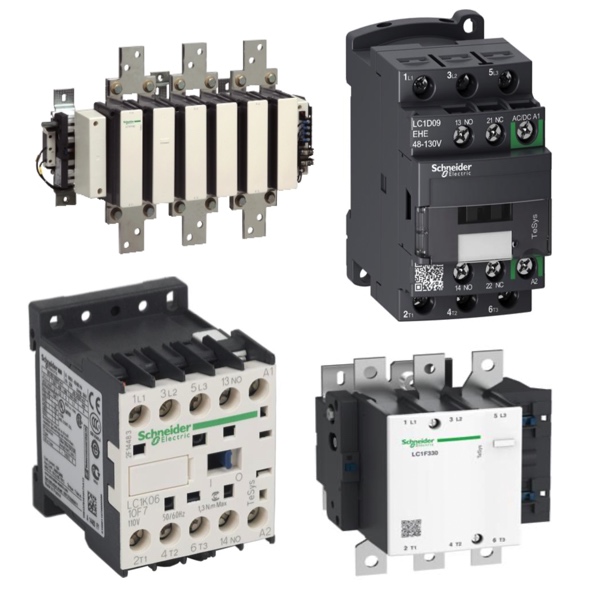
IEC non-reversing contactors are electrical switching devices designed to control motors and electrical loads that operate in a single direction. Commonly used in direct online (DOL) motor control circuits, these contactors allow power to be safely switched to a motor using a low-power control signal. They are a foundational component in many industrial and commercial motor control systems where reversing operation is not required.
Manufactured in accordance with International Electrotechnical Commission (IEC) standards, IEC non-reversing contactors are designed for global compatibility and consistent performance. They are available in a wide range of current ratings, pole configurations, and coil voltages—typically covering control voltages and power supplies from 12 to 690 VAC at 50/60 Hz. Auxiliary contacts can be added for signaling, interlocking, or integration with timers, relays, and other control devices.
Non-reversing contactors are commonly paired with overload relays and upstream branch circuit protection to form a complete motor starter assembly. When energized, the contactor closes its main contacts to supply power to the motor. If an overload condition is detected, the overload relay opens the control circuit, causing the contactor to drop out and disconnect power. This coordinated operation supports safe, reliable motor control across applications such as pumps, fans, conveyors, compressors, and heating loads.
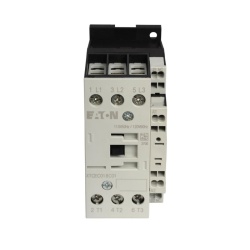
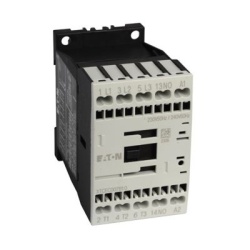
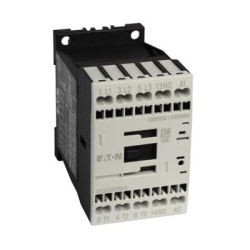
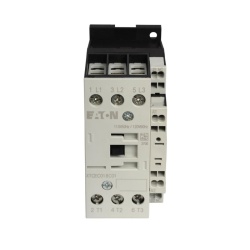
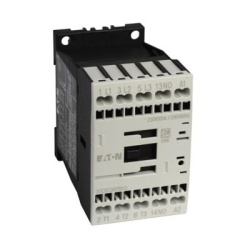
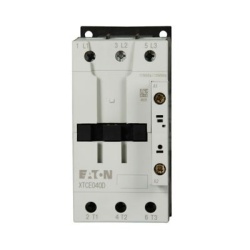
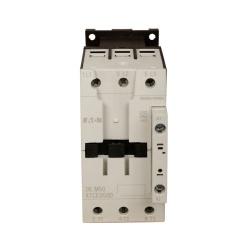
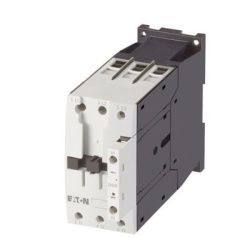
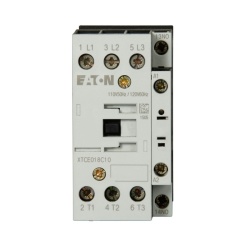
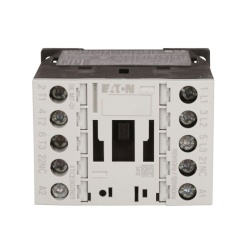
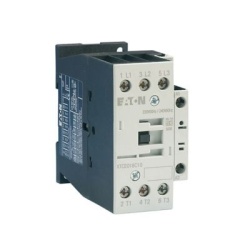
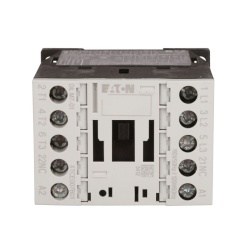
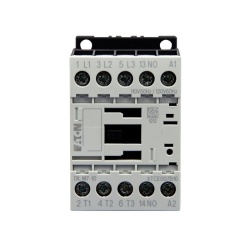
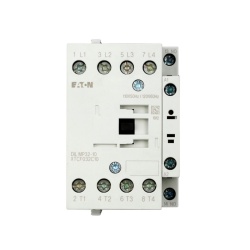
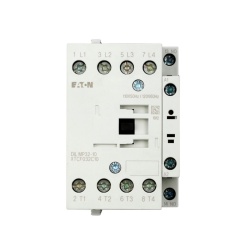
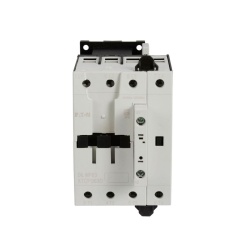
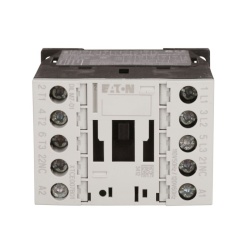
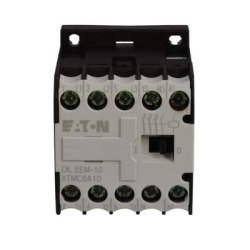
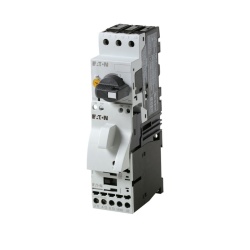
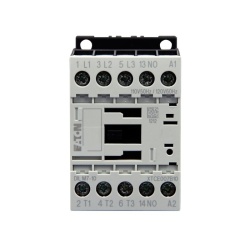
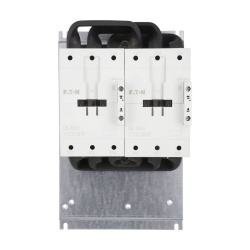
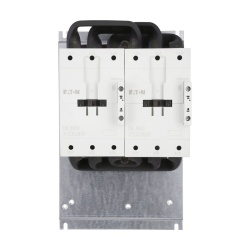
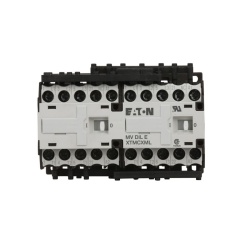
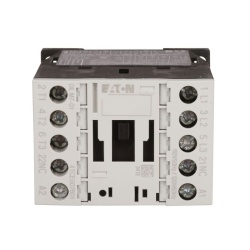
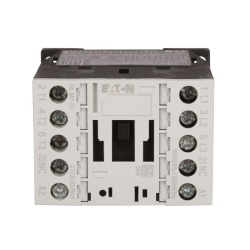
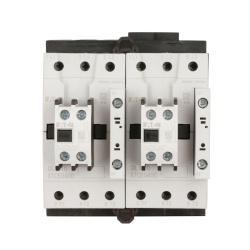
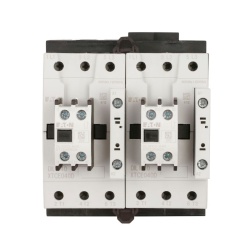
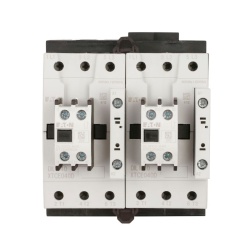
More Information about Non-Reversing Contactors
These contactors are used in various applications where motors need to rotate in only one direction. They can switch heating loads and supply power to the motor in a single direction. Non-reversing contactors are available in different NEMA sizes, indicating their physical dimensions and mounting characteristics. Overload protection is an important consideration to prevent motor damage due to excessive current, and some contactors include auxiliary contacts for additional control functions or signaling purposes. The current rating of non-reversing contactors determines their maximum current-handling capacity without overheating or malfunctioning. Coil voltage refers to the voltage required to energize the contactor's coil and activate the switching mechanism. Contactors come in various sizes, with larger ones capable of handling higher currents. They are commonly used in motor control applications across industries, either provided separately or as part of a motor control assembly.
When energized, non-reversing contactors allow power to flow to the motor in the specified direction. They are designed by different manufacturers, offering various details and specifications to meet specific application requirements. Compatibility with other control devices, such as relays or timers, should be considered for proper integration into the system. Non-reversing contactors are categorized based on their intended use, such as industrial, commercial, or residential applications. Reviews and ratings can assist in the decision-making process when selecting non-reversing contactors for a project. Depending on the specific motor control requirements, additional components like fuses, transformers, or capacitors may be needed. Non-reversing contactors typically have multiple poles to handle the necessary switching connections for the motor and control circuits.
FAQs
Q: What is a non-reversing contactor used for?
A non-reversing contactor is used to switch power to motors or loads that operate in one direction only, commonly in direct online motor control applications.
Q: How is a non-reversing contactor different from a reversing contactor?
A non-reversing contactor allows motor operation in a single direction, while a reversing contactor uses additional contactors and interlocking to enable forward and reverse rotation.
Q: Do IEC non-reversing contactors provide overload protection?
No, contactors do not provide overload protection on their own. They are typically used with an overload relay that monitors motor current and interrupts the control circuit during overcurrent conditions.
Q: What factors should be considered when selecting an IEC contactor?
Key considerations include motor current rating, coil voltage, number of poles, duty rating, and compatibility with overload relays and other control components.
Q: Are IEC non-reversing contactors suitable for heating loads?
Yes, many IEC non-reversing contactors are rated for switching resistive or heating loads, provided the contactor’s current and duty ratings match the application requirements.
Why Buy IEC Non-Reversing Contactors from RSP Supply
RSP Supply offers a broad selection of IEC non-reversing contactors to support dependable motor control and load switching across industrial and commercial environments. These contactors are used by panel builders, OEMs, and maintenance teams to create standardized, IEC-compliant control systems. Our product offerings help ensure proper integration, reliable operation, and long-term performance in demanding motor control applications.