

Long Life Batteries
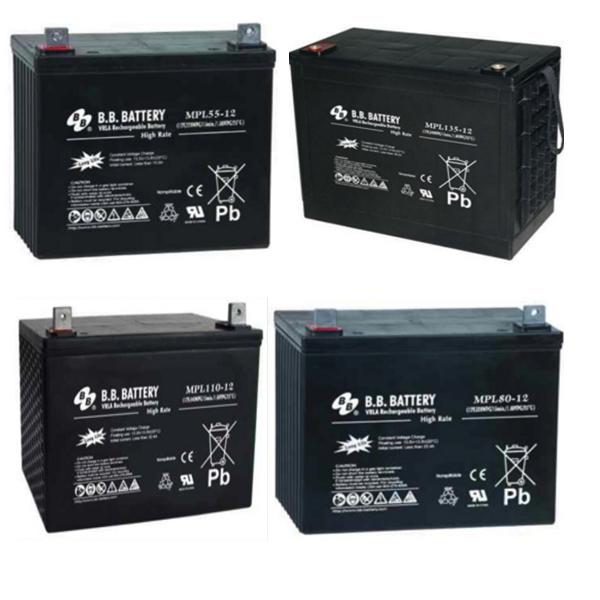
Long-life rechargeable batteries are designed for demanding applications that require dependable power, extended service life, and stable performance under continuous standby conditions. RSP Supply offers long-life Valve Regulated Lead Acid (VRLA) batteries well suited for use in UPS systems, telecommunications equipment, marine installations, and other high-rate, heavy-duty environments where reliability is critical.
The service life of a VRLA battery is influenced by several key factors, including operating temperature, cycle life, and depth of discharge (DOD). Batteries are rated for optimal performance within a specific temperature range, and exposure outside that range can significantly shorten usable life. Cycle life refers to the number of charge and discharge cycles a battery can withstand, while depth of discharge represents how much of the battery’s capacity is used during each cycle. Deeper and more frequent discharges reduce overall battery lifespan.
Long-life batteries are often considered a hybrid between deep cycle and high rate batteries, offering the advantages of both with enhanced float life. Deep cycle designs support repeated discharge cycles, while high rate batteries deliver short bursts of high power. Enhanced float performance allows long-life batteries to remain fully charged and ready for operation over extended periods, making them ideal for standby and backup power applications in industrial and commercial systems.



FAQs
Q: What applications are long life rechargeable batteries used for?
Long life rechargeable batteries are commonly used in UPS systems, telecommunications equipment, marine applications, and industrial control systems that require reliable standby or backup power.
Q: What factors affect the lifespan of a VRLA battery?
The primary factors affecting battery life are operating temperature, cycle life, and depth of discharge. Proper charging and environmental control help maximize service life.
Q: What does depth of discharge (DOD) mean?
Depth of discharge refers to the percentage of a battery’s total capacity that has been used. Discharging a battery beyond its recommended DOD reduces its overall lifespan.
Q: What is float or standby mode?
Float mode maintains a battery at a constant voltage to offset self-discharge while keeping it fully charged. This allows the battery to remain ready for immediate use in backup power situations.
Q: How do series and parallel battery connections differ?
Wiring batteries in series increases voltage without increasing capacity, while wiring in parallel increases capacity without increasing voltage. Combining both methods can increase both voltage and amp-hour capacity.
Why Buy Long Life Batteries from RSP Supply
RSP Supply offers a selection of long life rechargeable batteries designed for reliable performance in critical power applications. Our products support extended float life, consistent output, and compatibility with industrial power systems. Customers rely on RSP Supply for dependable battery solutions, technical guidance, and components engineered to support long-term operational reliability