

Dwyer RTDs
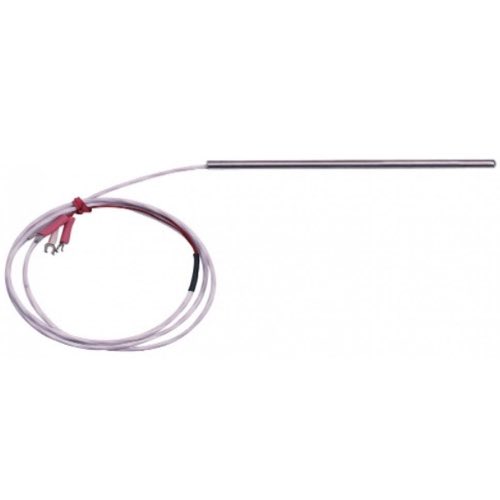
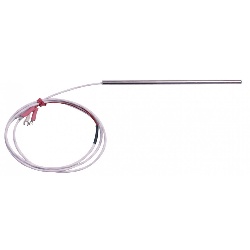
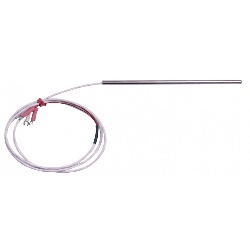
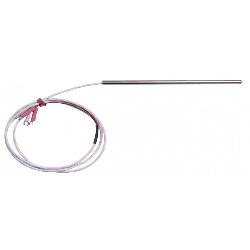
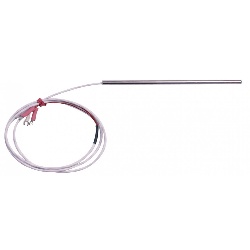
Dwyer RTDs are available as duct-mounted, immersion, surface-mount, and room temperature sensors using platinum PT100 and PT1000 resistance elements for precise and stable temperature measurement in HVAC, building automation, and industrial process control applications.
Dwyer resistive temperature devices (RTDs) are engineered to deliver the temperature measurement stability required in process industry applications where accurate and reliable readings are essential. RTDs function by measuring the resistance of a sensing element, typically platinum, whose resistance changes predictably with temperature, allowing precise temperature determination from a known baseline. Platinum is the most common material used in industrial RTDs due to its high accuracy, linearity with temperature, long-term stability, and excellent resistance to corrosion and oxidation.
Dwyer RTDs are available in both thin-film and wire-wound element configurations. Thin-film elements offer ruggedness, resistance to shock and vibration, and low cost, making them well-suited for a wide range of industrial control and instrumentation applications. Wire-wound elements provide the highest accuracy and are preferred for applications requiring laboratory-grade measurement stability across wide temperature ranges. Both element types conform to IEC 751 and DIN 43760 accuracy standards, with PT100 elements delivering 100 ohms nominal resistance at 0°C and a temperature coefficient of 0.00385 ohms per ohm per degree Celsius.
Dwyer RTD temperature range specifications provide accuracy within 0.5 degrees Celsius or 0.6 percent of full scale, with a low drift rate of 0.05 ohms or 0.12 percent of full scale per week. This level of stability ensures that temperature readings maintain the same integrity as a high-quality laboratory thermometer, making Dwyer RTDs a dependable choice for HVAC controls, building automation systems, and process monitoring applications where consistent performance is critical.




FAQs
Q: What are Dwyer RTDs used for?
Dwyer RTDs are used for accurate temperature measurement in HVAC systems, building automation, and industrial process applications where stable, repeatable, and low-drift readings are required.
Q: What types of RTDs does Dwyer offer?
Dwyer offers duct-mounted, immersion, surface-mount, and room temperature RTDs using platinum PT100 and PT1000 resistance elements in thin-film and wire-wound configurations.
Q: How accurate are Dwyer RTDs?
Dwyer RTDs provide accuracy within 0.5 degrees Celsius or 0.6 percent of full scale, with a low drift rate of 0.05 ohms or 0.12 percent of full scale per week, conforming to IEC 751 and DIN 43760 Class A and Class B accuracy standards.
Q: How do Dwyer RTDs integrate with control systems?
Dwyer RTDs provide standard resistance outputs that interface directly with building automation systems, PLCs, and temperature transmitters for precise monitoring and control.
Q: Do Dwyer RTDs require calibration and maintenance?
Yes. Periodic inspection and calibration are recommended to maintain measurement accuracy and identify potential drift or installation issues, especially in critical process and safety applications.
Why Buy Dwyer RTDs from RSP Supply
RSP Supply offers a dependable selection of Dwyer RTDs designed for accurate and stable temperature measurement. Our catalog includes multiple sensor styles and element options to support HVAC and industrial automation applications. Customers rely on RSP Supply for trusted manufacturers, clear technical specifications, and temperature sensing solutions built for professional system performance.