

DMS Yagi Antennas
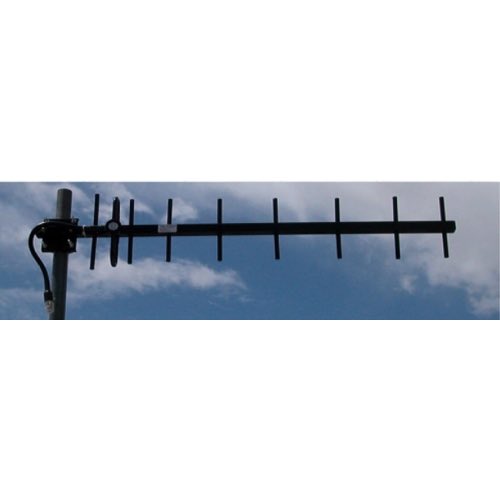
DMS Yagi antennas are designed to provide high-gain directional wireless performance in applications where long-range communication and strong signal focus are essential. RSP Supply offers DMS Yagi antennas for industrial, commercial, and outdoor systems that require dependable connectivity across extended distances. These antennas are commonly used in remote industrial sites, rural installations, utilities, agriculture, telecommunications, and public safety applications where targeted wireless communication helps overcome distance, terrain, and environmental challenges.
Yagi antennas focus signal energy in a specific direction, making them well-suited for point-to-point and point-to-multipoint communication systems. DMS Yagi antennas are used with cellular, Wi-Fi, broadband, and other industrial wireless networks where higher gain and stronger directional performance are needed than what omnidirectional antennas can typically provide. Their tuned element construction helps deliver consistent gain across the intended frequency range, supporting reliable signal transmission and reception in systems that depend on stable long-distance wireless links.
DMS Yagi antennas are built for rugged outdoor service and are commonly equipped with weather-resistant features such as sealed connectors and ultraviolet-resistant coatings. These design features help support long-term performance in exposed environments where equipment must continue operating through changing weather and demanding field conditions. With durable construction and focused signal capability, DMS Yagi antennas help support reliable industrial connectivity in applications where range, strength, and directional performance are critical.

FAQs
Q: What are DMS Yagi antennas used for?
DMS Yagi antennas are used for long-range directional wireless communication in industrial, commercial, and outdoor applications such as utilities, agriculture, telecommunications, and public safety.
Q: What makes a Yagi antenna different from an Omni antenna?
A Yagi antenna focuses signal strength in one direction for a longer range and stronger targeted performance, while an Omni antenna provides broad 360-degree horizontal coverage.
Q: Are DMS Yagi antennas suitable for 4G and 5G applications?
Yes, DMS Yagi antennas are used with 4G, 5G, Wi-Fi, broadband, and other industrial wireless communication systems, depending on the model and frequency range.
Q: Why are Yagi antennas useful for long-range communication?
Yagi antennas provide higher directional gain, which helps improve signal strength and communication range when the signal source is in a known direction.
Q: What applications commonly use DMS Yagi antennas?
They are commonly used in remote industrial sites, rural networks, utilities, agriculture, telecommunications, public safety systems, and point-to-point wireless links.
Why Buy DMS Yagi Antennas from RSP Supply
RSP Supply offers DMS Yagi antennas for customers who need dependable long-range directional wireless communication in industrial and outdoor applications. With antenna options suited for cellular, Wi-Fi, broadband, and industrial wireless systems, customers can source practical solutions for point-to-point links, remote monitoring, and targeted signal coverage.