

Appleton Push Buttons, Switches & Signaling Devices
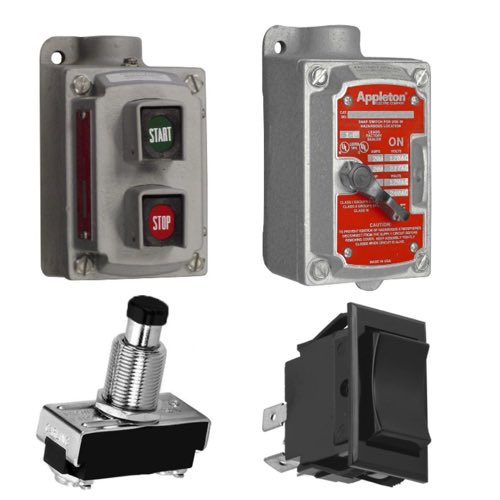
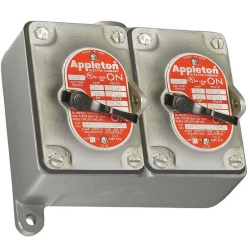
Appleton push buttons, switches, and signaling devices are engineered for safe and dependable operation in industrial and hazardous environments where reliability is critical. Designed for control, monitoring, and indication functions, these devices support human and machine interfaces in locations where flammable gases, vapors, or combustible dust may be present. Their rugged construction helps ensure long-term performance in demanding conditions.
The product range includes push buttons, selector switches, pilot lights, signal towers, beacons, strobes, horns, and audible alarms. These devices provide clear visual and audible feedback on equipment status, process conditions, and system alerts. Common applications include refineries, chemical processing facilities, manufacturing plants, material handling systems, and industrial control panels.
Manufactured from heavy-duty materials such as aluminum and stainless steel, Appleton devices are built to protect internal circuitry from environmental and mechanical stress. Many models are UL listed and certified for use in Class I, II, and III hazardous locations, with enclosure options designed to maintain NEMA-rated protection when installed according to specifications.









































FAQs
Q: What environments are Appleton push buttons and signaling devices designed for?
Appleton devices are designed for industrial and hazardous environments such as refineries, chemical plants, and manufacturing facilities where explosionproof or dust-ignition-proof operation is required.
Q: What certifications do Appleton control stations have?
Many Appleton control stations are certified for Class I, Groups C & D and Class II, Groups E, F, and G hazardous locations. Most models are UL listed, factory sealed, and designed to withstand harsh operating conditions.
Q: What should I know about installing Appleton push buttons and switches?
Proper installation is essential to preserve explosionproof and environmental ratings. Devices must be installed into compatible enclosures using correct thread sizes, sealing surfaces, torque values, and manufacturer-recommended practices.
Q: What are ideal Appleton signaling products for a machine control panel?
LED pilot lights, audible horns, and visual beacons are commonly used in machine control panels to provide clear status indication and reliable alerts in hazardous or industrial environments.
Q: How can NEMA ratings be maintained when installing Appleton devices in enclosures?
To maintain a NEMA rating, installed devices must have equal or greater NEMA ratings than the enclosure, watertight conduit hubs should be used for wiring entries, and bonded washers with appropriate materials must be installed to create proper seals.
Q: What maintenance information is available for Appleton pilot devices?
Appleton provides detailed installation, inspection, and replacement guidance in product instruction sheets to help ensure continued safe operation and preservation of hazardous-location integrity.
Why Buy Appleton Push Buttons, Switches & Signaling Devices from RSP Supply
RSP Supply provides a wide selection of Appleton push buttons, switches, and signaling devices for hazardous and industrial control applications. Our offerings support safe, code-compliant operation across a range of environments and industries. Customers rely on RSP Supply for access to trusted manufacturers, technical expertise, and dependable control and indication solutions built for demanding conditions.