Supplementary_vs_Branch_Circuit_Breakers.pdf
Today we want to talk about two different types of protection that circuit breakers are designed to provide: Branch Protection and Supplementary Protection. We will discuss what each of these terms mean as well as the applications each type of breaker is commonly used for.
Branch and supplementary breakers have been designated for use in only specific applications as defined in the National Electric Code and UL. When choosing which breakers to use in an electrical design, the differences between branch and supplementary breakers should be considered. Ignoring these details and using the wrong breaker in certain applications can be very dangerous.
Branch Circuit Protection
UL 489 Listed Breakers
- Independently tested and rigorously verified to function multiple times without failure.
- Can protect multiple devices and circuits.
- The breakers we have in our homes are branch circuit breakers (protect multiple outlets or lights).
- Can be used both as a Branch and Supplementary protector.
Common applications include:
- Branch circuit protection in control panels, panel boards, switchboards, and motor control centers.
- Motor overload and motor short circuit protection (UL 489 recognized motor circuit protectors) for control panels and motor control centers.
- Can be used both as branch and supplementary breakers.
Supplementary Circuit Protection
- UL 1077 Recognized
- Independently tested, but not to the same rigorous standard as Branch Circuit Breakers. Only required to provide protection one time in testing.
- Only intended to protect one device.
- Used in addition to branch protection.
- Cannot be used as a branch circuit protector.
Common applications include:
- Electrical equipment such as motor control circuits, control power transformers, relays, PLC I/O points, and lighting circuits.
- Ideal replacement for fuses applied as supplementary protection.
- Usually used in place of small fuses that protect sensitive equipment.
Transcript
[0m:4s] Hi I'm Josh Bloom, welcome to another video in the RSP Supply education series. Today, we want to talk about the different types of protection that circuit breakers can offer, both supplementary and branch circuit protection.
[0m:16s] Here you can see, we have two circuit breakers. They look very similar — same size, shape and color. Are they the same? They are not. They function very differently. One of them is a supplementary breaker, the other is a branch breaker.
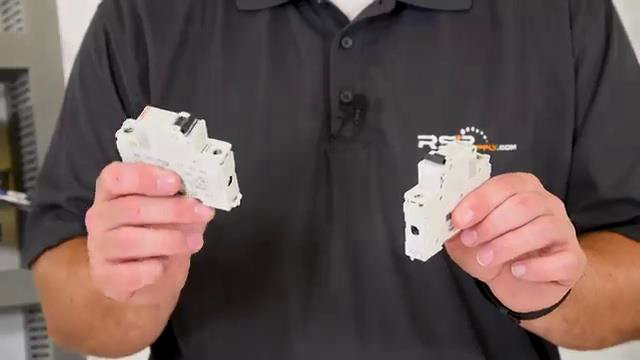
[0m:32s] Both branch and supplementary breakers are designed for specific use in applications defined by the National Electric Code and UL. Using the wrong circuit breaker in certain applications can be very dangerous. Supplementary breakers, also known as UL 1077 recognized breakers, go through independent testing but to a lower standard, because they are designed to only protect one device at a time.
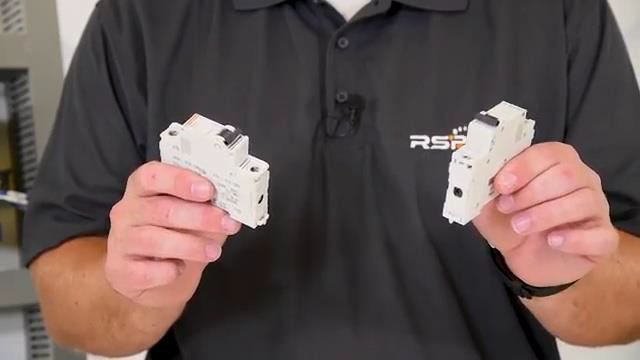
[1m:9s] Branch circuit protection is a higher level of protection for circuit breakers, also known as UL 489 listed breakers.
[1m:21s] These go through independent testing to a much higher standard because they are designed to protect multiple devices at one time. They can be used as both branch circuit protectors and supplementary protectors, whereas supplementary protectors cannot be used as branch protection.
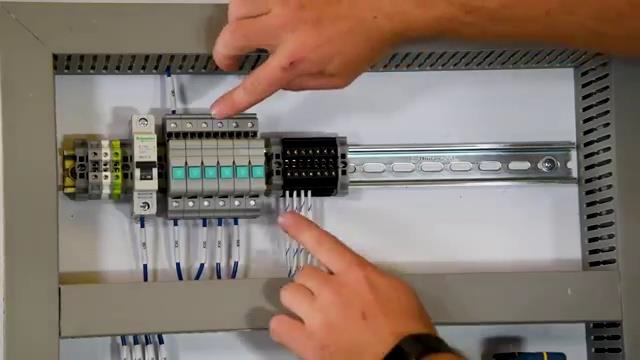
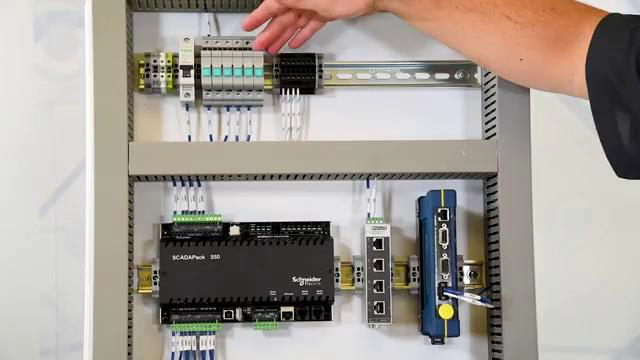
[1m:43s] Let me demonstrate how these breakers work on this industrial control panel. As you can see, I've got several breakers located at the top here — both branch and supplementary protection.
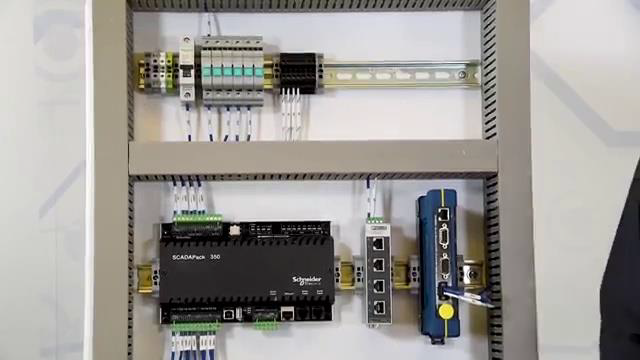
[1m:52s] The branch circuit protector is located here. This breaker protects the entire control panel. If I turn this breaker off, it shuts down everything located within the panel.
[2m:5s] Supplementary breakers are designed to control one specific device within the panel. For example, one supplementary breaker might power a radio, another might power a switch.
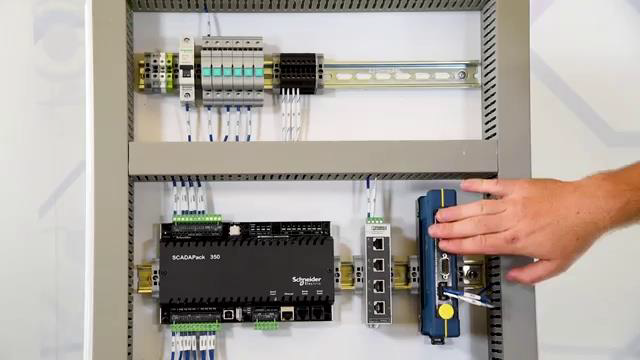
[2m:28s] Supplementary protectors are designed to protect one device at a time.
[2m:32s] For a full selection of circuit breakers, go to the RSP Supply website.
[2m:36s] For more information or other educational videos, please go to RSPSupply.com, the Internet's top source for industrial hardware. Also, please remember to like and subscribe.