

Transcript:
[0m:4s] Hi I'm Josh Bloom, welcome to another video in the RSP Supply education series. If you find that these videos are helpful to you, it certainly helps us out if you could give us a big thumbs up and subscribe to our channel.
[0m:17s] In today's video, we are going to continue on in our brief video series where we are learning about the basics of safety relays.
[0m:27s] Safety relays are one of the more misunderstood and confusing pieces of electrical hardware that you may encounter.
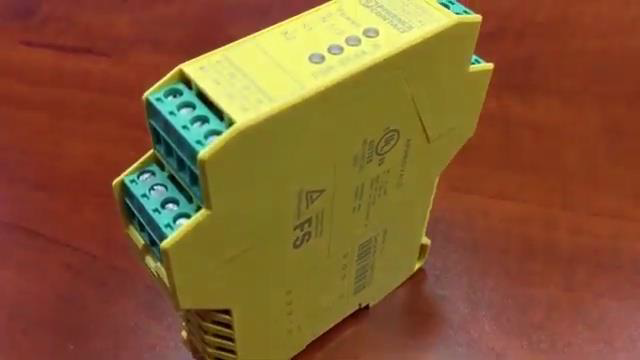
[0m:35s] However, when you understand some of the basic hardware components that are used and why they are used, understanding these types of relays becomes much easier.
[0m:47s] In our last video, we talked about how safety relays can serve many different purposes but are primarily used in industrial and manufacturing plant environments.
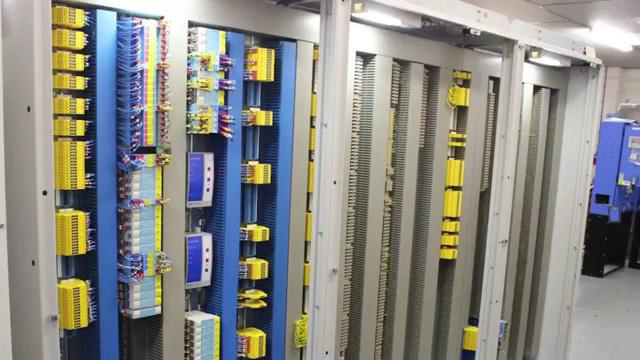
[0m:58s] We also talked about how they are used to monitor different functions in specific processes to ensure a safe working environment.
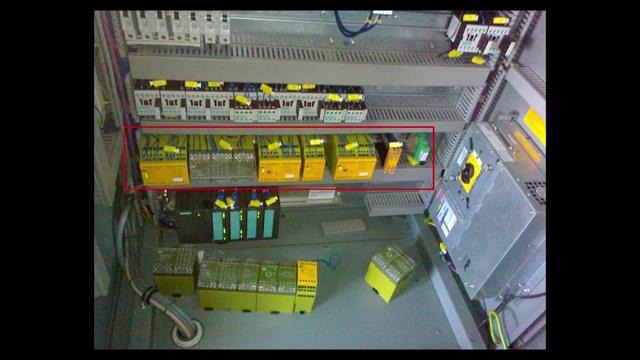
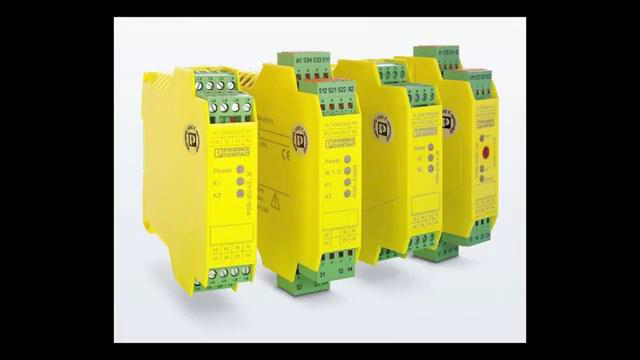
[1m:7s] If you have not already seen that video, we will link it in the description below as it will help you better understand some of the topics that we will discuss today.
[1m:17s] For the purpose of this video, we want to focus on some of the most critical hardware components that make up a safety relay. Specifically, force guided contacts.
[1m:29s] Understanding how this hardware works will ensure that you have a better understanding of the overall function of one of these types of relays. So, let's get started. When looking at a normal relay, you will typically see a set of contacts that share a common power source. How many contacts actually exist on the relay depends greatly on the type of relay that you are using.
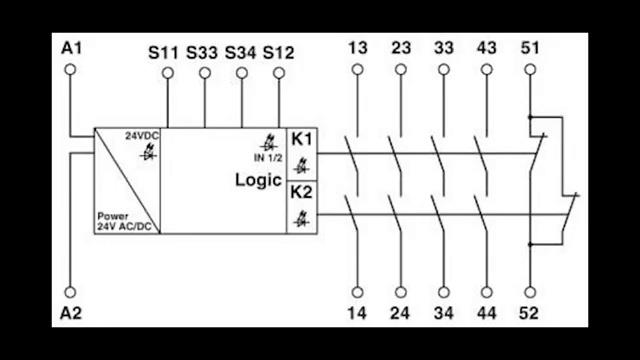
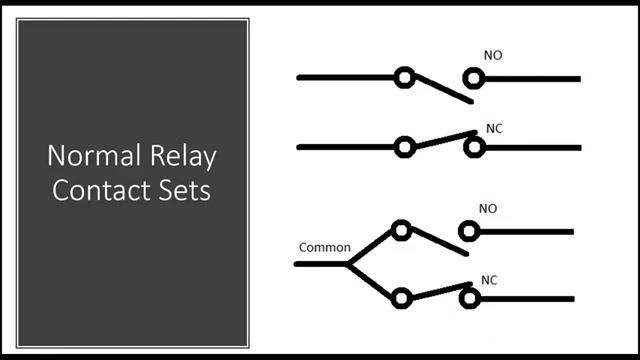
[1m:54s] However, it is not uncommon to see two or more sets of contacts. These contacts are either normally open
[2m:3s] or normally closed.
[2m:5s] When the relay coil is energized, the contacts move from their normal state to their energized state.
[2m:13s] For example, a normally open contact
[2m:17s] is open when the relay is not energized. It is in its normal state.
[2m:22s] When the coil is energized, the contact changes position to its energized state.
[2m:30s] This is in essence how a typical relay will function.
[2m:34s] These traditional relays are used all over the world in almost every application that you can think of.
[2m:41s] However, they can create problems in certain situations depending on what you expect the relay to do.
[2m:49s] Let's use an example of a relay that has a normally open and normally closed contact.
[2m:54s] Let's assume that when the relay is not energized, the normally closed contact is wired to an indication light.
[3m:2s] This light lets an operator know if a certain machine is off and that an area that he or she is working on is safe.
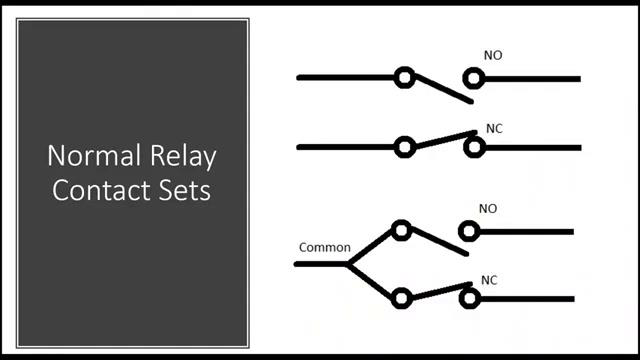
[3m:11s] Conversely let's assume that when the relay is energized, the normally open contact becomes closed
[3m:18s] providing energy for a contactor that might start a motor, which will indicate to the operator that the area is not safe and a particular machine is running.
[3m:29s] The problem arises when the relay fails, for example. What happens when the normally open contact becomes welded shut and the machine continues to run?
[3m:40s] The operator will not know if the area is unsafe, even if the machine is running, because the light that normally indicates safe status may be on because of the failed relay, which has caused confusion and a very dangerous situation for the operator.
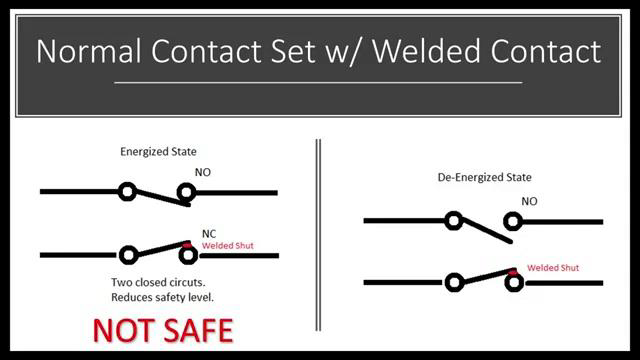
[3m:59s] This is because the normally open contact cannot move into the correct position, killing power to the motor, even if the coil is deenergized on the relay, to let the operator know that the machine is not running and the area is unsafe.
[4m:32s] This is one of the main reasons you don't use traditional relays in safety situations.
[4m:39s] Safety relays function differently.
[4m:42s] One of the main differences and one of the defining characteristics of safety relays is the fact that they use force guided contacts.
[4m:52s] Force guided contacts consist of multiple sets of contacts.
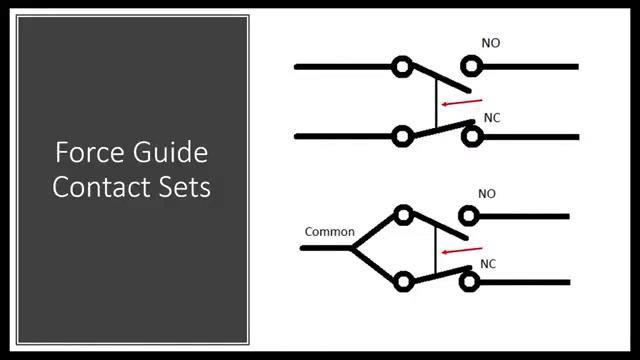
[4m:57s] The contact set consists of at least one normally closed contact
[5m:1s] and one normally open contact.
[5m:4s] These contacts will be mechanically linked together.
[5m:8s] Because of this mechanical connection, the contacts can never be closed at the same time.
[5m:15s] Safety relays must always be designed in such a way that, if wired correctly, neither a fault in the device or an external fault caused by a sensor will lead to the loss of the safety function. So let's look back at our previous example, and see how a safety relay with force guided contacts might have prevented the dangerous situation that occurred.
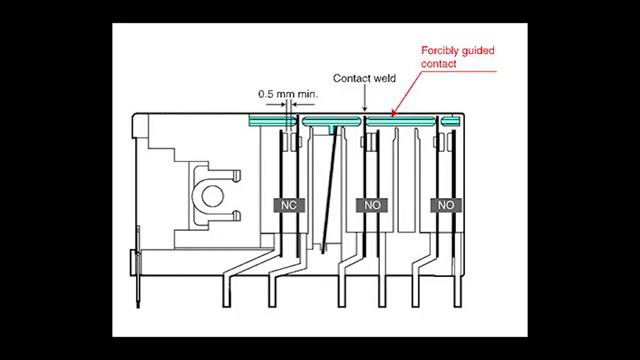
[5m:40s] In a safety relay, there would have been an independent set of contacts monitoring the safe status. Let's assume that this is the normally closed contact.
[5m:52s] When closed and in its normal state,
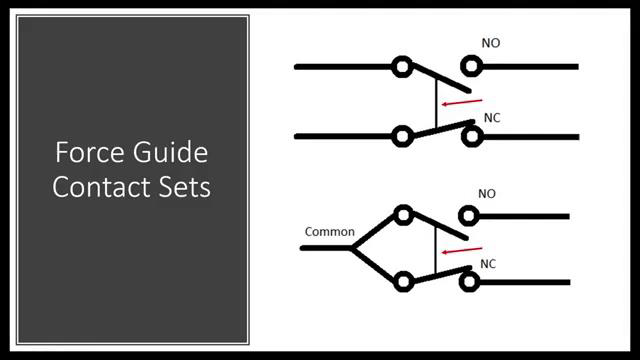
[5m:55s] a light will be powered, showing that the area is safe.
[5m:58s] Another independent contact that is normally open
[6m:2s] will energize the motor so that the machine can run.
[6m:6s] When that contact is closed, or when the relay is energized, this machine operation will indicate to the operator that the machine is, in fact, running, and the area is unsafe. But what happens again when the normally open contact that monitors running or the danger status of the motor gets welded shut like before? The difference this time is that there are two independent sets of contacts that are joined together mechanically.
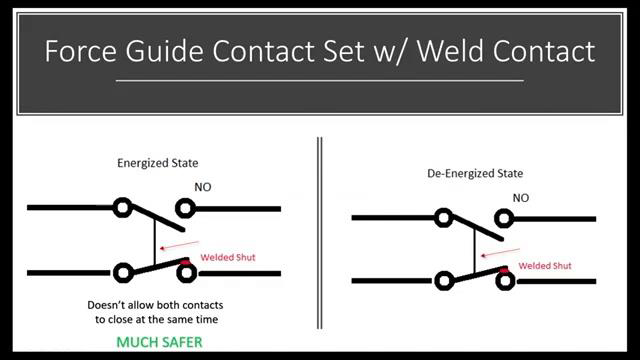
[6m:34s] One is open and the other is closed. They cannot be both closed at the same time.
[6m:40s] So when the open contact is welded shut,
[6m:43s] the normally closed contact cannot close, therefore it cannot power the light indicating that the area is safe.
[6m:53s] This mechanical connection between the normally open and normally closed contact is one of the most important characteristics that enable a safety relay to function as they do.
[7m:5s] However, force guided contacts are not the only safety feature on these relays. In part three of this series, we will discuss more hardware characteristics that make up safety relays and continue to help us better understand how they function. For a full line of safety relays and thousands of other products, please go to our website. For more information or other educational videos go to RSPSupply.com, the Internet's top source for industrial hardware. And also, don't forget: like and subscribe.