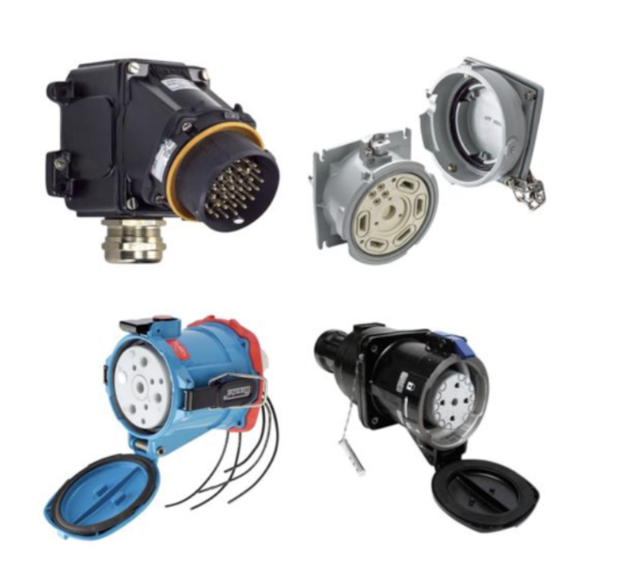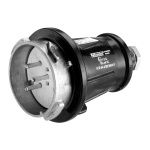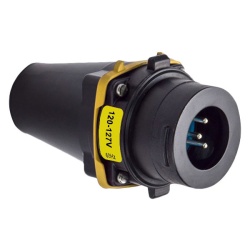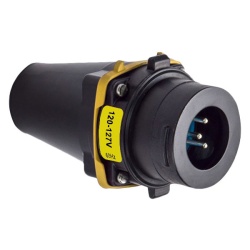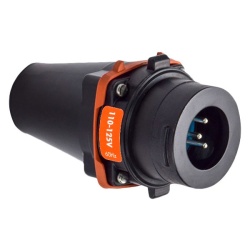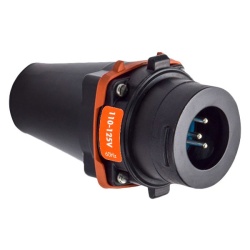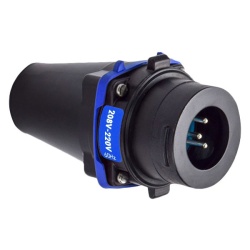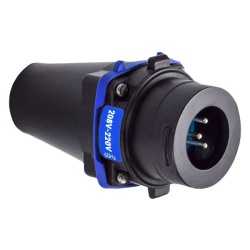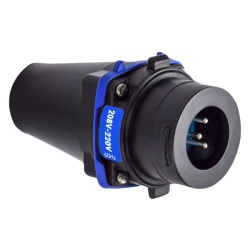

Meltric Industrial Plugs & Receptacles

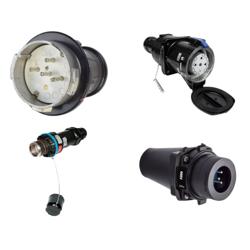
Meltric is renowned for its plugs and receptacles, emphasizing both electrical and user safety. Their commitment to creating quality electrical connectors is evident in their products, which are designed to ensure reliable electrical connections while prioritizing the user's safety. One of the standout features of Meltric plugs is their ability to function as a disconnect switch, allowing for quick and safe branch circuit disconnect switching.


These industrial plugs and receptacles are particularly useful when there's a need to disconnect electrical equipment or break electrical connections during maintenance or emergencies. The Meltric switch rated plugs and multipin plugs and receptacles offer advantages in both normal and hazardous locations. They can handle high amperage and are designed to quickly connect and disconnect without risking arc flash hazards.

Meltric's dedication to safety is further underscored with their design of plugs that can safely handle direct current applications, even at full load. Their hazardous location plugs are designed to operate safely in environments where there's a high risk of explosions or fires. Another noteworthy feature of some Meltric devices is the spring-loaded silver nickel contacts, ensuring a consistent and secure electrical connection every time.

Found 93 items
Filters (1)
Found 93 items
Manufacturer
Meltric (93)
Component
Accessory (2584)
Connector (25)
Inlet (2868)
Inlet/Box (26)
Plate (1)
Receptacle (5023)
RECEPTACLE/ANGLE ADAPTER (27)
Receptacle/Box (37)
Meltric Series
DS100 (1)
DS100C (2)
DSN20 (1)
DSN30 (3)
DSN60 (3)
DSN150 Switch-Rated (1)
DX1 (21)
DX2 (3)
DX3 (6)
DX6 (5)
Receptacle Amperage
16 Amp (1)
20 Amp (44)
30 Amp (9)
60 Amp (8)
100 Amp (8)
125 Amp (3)
150 Amp (1)
200 Amp (3)
600 Amp (8)
Receptacle Color
Black (83)
Blue (9)
Receptacle Composition
Metal (74)
Poly (19)
Receptacle Contact Configuration
1P+N+G (7)
2P+G (6)
2P+N+G (2)
3P+G (37)
3P+N+G (25)
4P+G (1)
11P+G (2)
24P+G (2)
36P+G (2)
Receptacle IP Rating
IP 65 (13)
IP 65/66 (2)
IP 66/67 (4)
IP 66/67/69 (1)
Receptacle Max Wire Size
2/0 AWG (1)
Receptacle Min Wire Size
4 AWG (1)
Receptacle NEMA Type
Type 4X (1)
Receptacle Size
0 (1)
Size 0 (2)
Size 1 (4)
Size 2 (25)
Size 3 (7)
Size 4 (2)
Size 5 (2)
Size 8 (27)
Size 9 (14)
Size P (1)
Receptacle Voltage
120 VAC (2)
125 VAC (3)
127 VAC (1)
208 VAC (7)
220 VAC (2)
230 VAC (2)
250 VAC (13)
277 VAC (1)
347/600 VAC (5)
400 VAC (5)
Normally In Stock
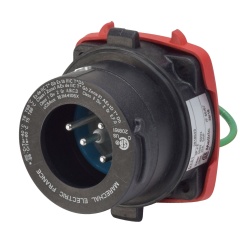
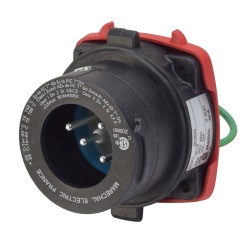
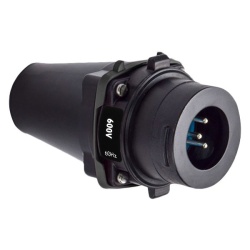
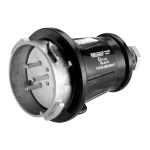
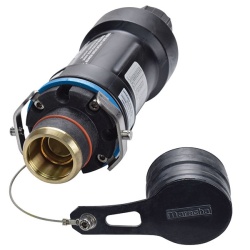
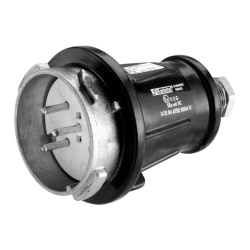
Meltric 66-94143-263-HAZ Switch-Rated Plug - 600 VAC, 150 Amp, Metal
Free U.S Ground shipping
$2708.50
$2257.08
Normally In Stock
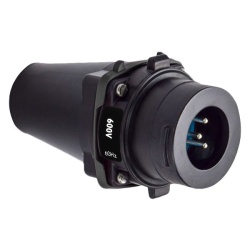
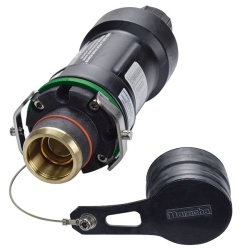
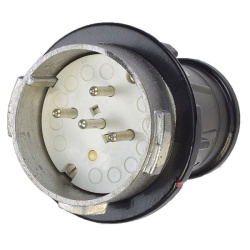
Meltric 2621017 DX1 PLUG METAL BLACK SIZE 8 IP 65 3P+N+G 20 A 400 VAC 50 Hz
Free U.S Ground shipping
$594.44
$495.37
Normally In Stock
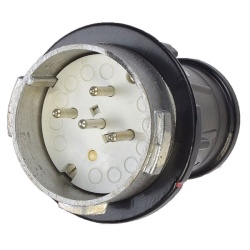
Meltric 2621013 DX1 PLUG METAL BLACK SIZE 8 IP 65 3P+G 20 A 400 VAC 50 Hz
Free U.S Ground shipping
$561.10
$467.58
Normally In Stock
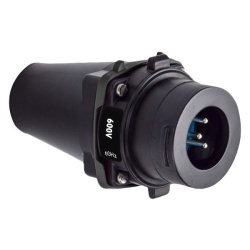
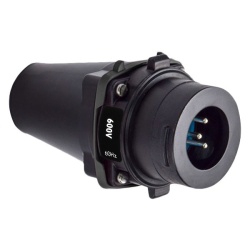
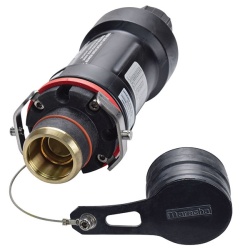
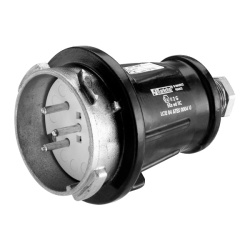
Meltric 44-4100T-P80 SP PLUG POLY BLACK SIZE S IP 66/67 G 600 A 600 VAC 60 Hz +2 AUX
Free U.S Ground shipping
$1059.00
$882.50
Normally In Stock
Meltric 2671043 Plug
Free U.S Ground shipping
$5291.27
$4409.39
Normally In Stock
Meltric 2671153K04 Plug
Free U.S Ground shipping
$5291.27
$4409.39

More Information About Meltric Plugs and Receptacles

Meltric makes industrial plugs and sockets that are meant for today’s factories, process‑control sites and power plants. The line mixes tough build quality with some smart design bits that try to keep people safe and machines running even when conditions get rough. By putting newer contact tech, solid housings and flexible set‑ups together, Meltric says it can make power wiring easier while still guarding workers and gear.

Meltric Switch‑Rated Plugs and Receptacles

Switch‑rated plugs let you make‑and‑break a circuit while it’s still live. That means a factory worker can hook up or pull off equipment without needing an extra disconnect switch somewhere else. So the system gets rid of the extra disconnect switches, which may cut down install time and also lower the chance somebody screws up. They’re built to take full load, handle the sparks and heat that come when you switch, and that should make the whole plant a bit safer and run smoother.

Meltric High‑Ampacity Plugs and Receptacles

High‑amp models are for jobs that pull big currents but can’t overheat. The key part is the spring‑loaded silver‑nickel contacts – they keep resistance low and last long. Those contacts can survive thousands of plug‑in cycles and still work even when they’re always under full load. You’ll see these in heavy‑duty gear, power panels and automated lines where the current is high and you need something that won’t quit.

Meltric Multipin Plugs and Receptacles

Multipin plugs bundle several power and signal lines into one small case. That cuts down on the amount of wire you need, speeds up installation and makes it harder to plug the wrong thing in. They’re common on machine tools, robot arms and other automated gear where space is tight and you need quick change‑overs. By giving fast, mistake‑free connections, these parts help high‑speed factories keep things moving while protecting the whole system.

Meltric Hazardous‑Location Plugs and Receptacles

Hazard‑site versions are built so they won’t spark or overheat in places where explosions could happen. Their explosion‑proof or intrinsically safe make‑up makes them good for oil and gas, chemical plants and other risky spots. Strong seals, temperature‑controlled parts and strict safety‑code follow‑through let them work in tough climates, keeping workers and equipment safer.

FAQs About Meltric Plugs and Receptacles

Q: What is branch circuit disconnect switching?
A: It’s a device that can isolate a slice of an electric distribution system, letting that part be shut off safely for repair or an emergency. It helps stop workers from touching live wires and keeps faults from spreading.
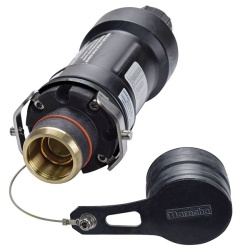
Q: What is a switch‑rated plug used for?
A: A switch‑rated plug is used to make and break power connections while the load is still on, controlling arcs and heat. It gives a safe spot for industrial power work and cuts out the need for separate disconnect gear, which may make the process smoother.

In short, Meltric’s design idea mixes tough build with safety‑first tricks across all its product families. Whether you need the convenience of switch‑rated parts, the strength of high‑amp models, the compactness of multipin gear, or the safety of hazardous‑location designs, each option aims to boost safety, raise efficiency and cut downtime for factories. That whole package lets modern plants count on solid power connections while they focus on getting more done and always improving.

AC Grounding Basics: Grounding Series (Part 4)

Grounding Requirements

The National Electrical Code (NEC) states that electrical systems must be grounded to a point that the maximum voltage, to ground underground conductors, does not exceed 150 volts. It also states that any 3-phase 4-wire, Y configurations and Delta configurations have the neutral wire grounded as well. These requirements cover any electrical systems ranging from single-phase 120 volts, all the way to 3-phase 480 volts AC. The conductor that needs to be grounded in these types of systems will always be the neutral wire. 

Bonding Conductor

A bonding conductor is needed between the grounded conductor and the equipment, grounding the conductor to the metallic enclosure of the main electrical service. It is important to make sure that a properly sized conductor is used to accommodate the potential surges that may occur in the electrical system. When grounding in a separately derived AC system, which is a system where components such as a generator can have the grounded conductors, where continuity is possibly interrupted by a transfer switch, it is important to make sure that the grounding conductor is bonded to the equipment grounding conductor of the metallic chassis on the load side of the electrical service through the use of a main bonding jumper. When continuity is not being interrupted on the load side, then it is critical to make sure that there is no bond between the neutral wire or grounding conductor and the metallic chassis of the electrical service. This will allow the main bonding to occur at the main service panel entrance point.