

RDA Whip Antennas
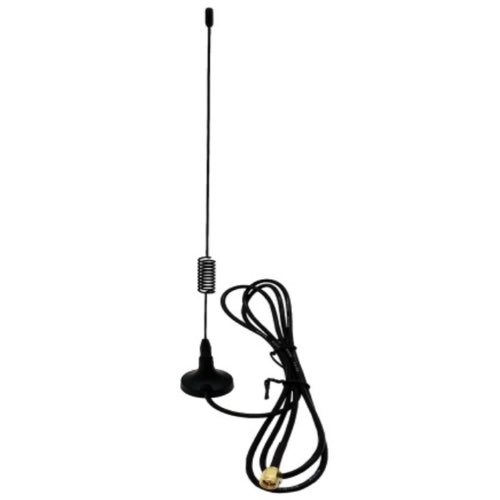
An RDA whip antenna is a type of omnidirectional antenna that is used for industrial wireless communication applications such as SCADA systems, telemetry systems, and Industrial Internet-of-Things (IIoT). Whip antennas are manufactured by RDA Solutions, LLC and are typically mounted directly to a radio, gateway, or wireless modem by using a connector such as SMA or N-type.
Whip antennas are omnidirectional, meaning that they radiate and receive radio signals in a 360-degree pattern. This means that when installed on a device, it can communicate with other nodes without needing to be pointed at them. Whip antennas are used in a variety of applications where space is a concern, or where antennas are typically mounted directly to a communication device. Whip antennas are used for industrial frequency bands such as 450 MHz, 900 MHz, and other telemetry frequencies used by data radios and remote monitoring equipment.
Most whip antennas are built in a rubber-duck style which features a coiled conductor inside a protective rubber or plastic sheath. This design provides a rugged and flexible antenna while still providing consistent signal integrity. Whip antennas typically offer moderate gain and provide reliable short-to-medium range communication, which is why they are often used for equipment-level connectivity in industrial control systems.
FAQs
What is an RDA whip antenna?
An RDA whip antenna is a compact omnidirectional antenna used on industrial radios and wireless devices to transmit and receive signals in a 360-degree pattern.
What are RDA whip antennas used for?
RDA whip antennas are commonly used in SCADA systems, telemetry networks, industrial IoT devices, and wireless monitoring systems where equipment requires reliable short-range wireless communication.
What frequencies do RDA whip antennas support?
Many RDA whip antennas operate in industrial communication bands such as 450 MHz and 900 MHz, which are commonly used for telemetry radios and industrial wireless networks.
What is the difference between a whip antenna and a Yagi antenna?
A whip antenna provides omnidirectional coverage for communication with multiple devices, while a Yagi antenna is directional and focuses signal strength in one direction for long-distance links.
Are whip antennas good for long-distance communication?
Whip antennas are best suited for short-to-medium range communication. For long-distance point-to-point wireless links, directional antennas such as Yagi antennas are typically used.