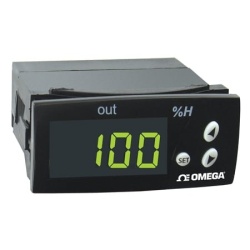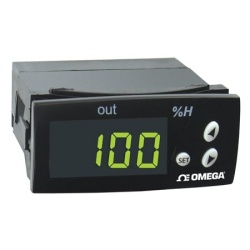

Dwyer Humidity Sensors

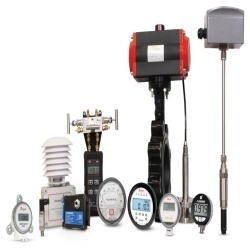
Dwyer humidity sensor is a type of humidity measuring device designed for accurate moisture readings in commercial and residential HVAC, air environmental control, and building automation systems. Known for their long-term accuracy, Dwyer humidity sensors are commonly used for building air quality monitoring, facilities management, ductwork sensing, air handling unit sensing, and energy management applications. They help ensure proper building ventilation and maintain humidity at optimum levels for occupants, equipment, and building materials.

Dwyer manufactures several models of humidity sensors including duct humidity sensors, room humidity sensors, outdoor humidity sensors, and combination temperature and humidity sensors. These are primarily non-contact capacitive sensors engineered to deliver repeatable performance in airflow applications and conditions with high humidity variations or temperature changes. For easy installation and setup, Dwyer humidity sensors are available with a variety of communications and output options including analog outputs, BACnet outputs, Modbus RTU or LonWorks outputs, and voltage/current outputs. Many models feature field calibration adjustments and replaceable sensor probes for convenient maintenance.

Found 8 items
Filters
Found 8 items
Manufacturer
Dwyer Instruments (8)
Component
Humidity Switch (5)
Humidity Transmitter (3)
(Instrument-Sensor) Measurement Accuracy
1% (5)
5% (5)
(Instrument-Sensor) Supply Voltage
115 VAC (5)
230 VAC (5)
(Instrument-Sensor) Temperature Range
32 - 158°F/0 - 70°C (5)
Normally In Stock
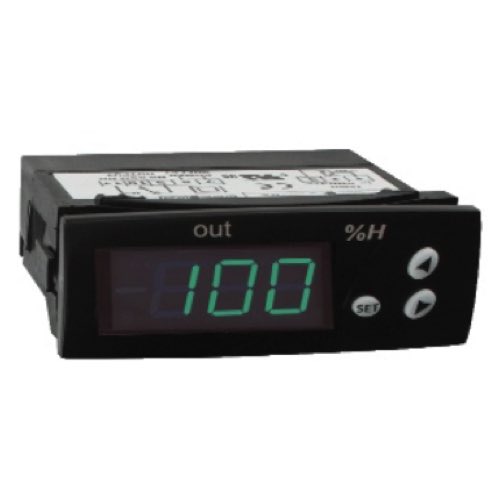
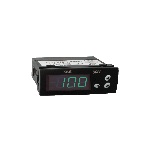
Dwyer HS-111 Humidity Switch
Free U.S Ground shipping
$135.74
$113.12
Normally In Stock
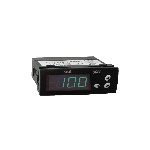
Dwyer HS-412 Humidity Switch
Free U.S Ground shipping
$135.74
$113.12
Normally In Stock
Dwyer HHT-IU Intrinsically safe humidity transmitter.
Free U.S Ground shipping
$1602.19
$1335.16
Normally In Stock
Dwyer HHT-EU Transmitter
Free U.S Ground shipping
$2107.10
$1755.92
Normally In Stock
Dwyer HHT-EU-LCD Transmitter
Free U.S Ground shipping
$2245.26
$1871.05
Normally In Stock
Dwyer HS-411 Humidity Switch
Free U.S Ground shipping
$148.73
$123.94
Normally In Stock
Dwyer HS-312 Humidity Switch
Free U.S Ground shipping
$148.73
$123.94
Normally In Stock
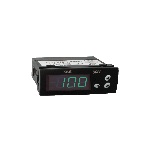
Dwyer HS-311 Humidity Switch
Free U.S Ground shipping
$148.73
$123.94

FAQs

What applications benefit most from Dwyer humidity sensors?

Dwyer humidity sensors are commonly used in HVAC systems, building automation networks, cleanrooms, healthcare facilities, schools, and commercial buildings where precise humidity monitoring is essential for comfort, safety, and equipment protection. Their stable measurement ensures proper ventilation, moisture control, and indoor air quality across a wide range of environments.

How do Dwyer humidity sensors improve HVAC performance and indoor air quality?

By providing accurate humidity readings, Dwyer sensors allow HVAC controllers to optimize dehumidification, cooling, and ventilation sequences. This leads to better indoor air quality, reduced energy consumption, and improved comfort. Consistent humidity measurement also prevents issues such as mold growth, condensation, and excessive dryness that can damage equipment or building materials.

Are Dwyer humidity sensors easy to install and integrate with BAS or DDC systems?

Yes, Dwyer designs its humidity sensors for quick installation and seamless integration with BAS and DDC systems. With options for analog voltage, current output, or digital protocols like BACnet and Modbus, these sensors connect easily to modern control platforms. Their intuitive wiring, clear labeling, and accessible mounting options streamline installation for HVAC technicians and automation contractors.

What makes Dwyer humidity sensors reliable in commercial and industrial environments?

Dwyer humidity sensors use high-quality capacitive elements and durable enclosures that perform well under fluctuating temperatures, airflow variations, and humidity extremes. Their components are engineered to resist drift, maintain long-term stability, and deliver accurate readings even in demanding conditions. Many models also support field calibration to ensure long-term measurement accuracy.

Do Dwyer humidity sensors come in combination models for temperature and humidity?

Yes, Dwyer offers combination temperature-humidity sensors that deliver both measurements from a single device. These units simplify installation, reduce the number of sensors required in each zone, and improve overall environmental control by giving automation systems more precise, correlated data. Combination sensors are especially useful in VAV systems, energy management applications, and tightly controlled commercial environments.

Analog and Digital Control Signals: The Basics

Digital Signals

Digital signals are represented in either a true or false. There is no gray area with digital signals. An example of this might be a light switch. A light switch is either on or off. Another example of this might be a motor that is running or not running. Digital signals can be generated with both AC and DC circuits with varying voltages, currents and resistance. Some practical examples of using digital signals in an industrial environment might be if a pump is running or not running or a whether a valve is open or closed.

Analog Signals

Analog signals convey information in the form of a range. A light switch might be on or off as a digital signal, but a dimmer switch would be an analog signal. It can be on or off, but it can also be somewhere in between. A practical example of using analog signals in an industrial environment would be if there is a need to measure the level of a tank; whether it's full, empty or somewhere in between. Analog signals can take many different forms with some of the more common being a 4 to 20 milliamp signal or a 0 to 5 or 0 to 10 volt signal. 

Communication

Communication in a device can either be sent or received. Whether that data is sent or received depends on the type of information. Is there a need to monitor the status of something? If so, an input needs to be received about that information. Is there a need to control something? If so, an output needs to be sent about what needs to occur. Receiving inputs and setting outputs are both things that can be accomplished by using both digital and analog signal types. Therefore, the signals are referred to as analog outputs (AO), analog inputs (AI), digital inputs (DI) or digital outputs (DO).