

PCTEL Whip Antennas
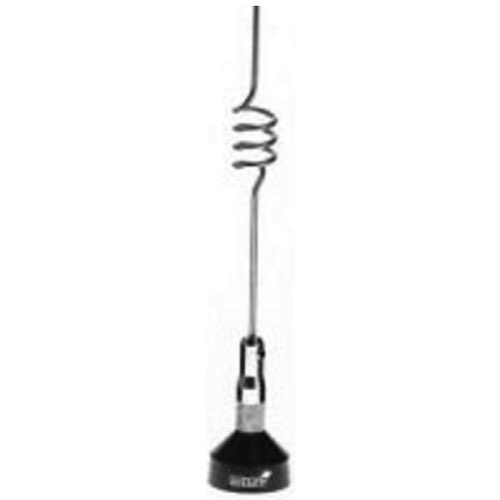
PCTEL’s whip antennas are an excellent choice for many industrial, commercial, and communications applications requiring reliable, omnidirectional wireless performance. Even if potential obstructions lie in the immediate vicinity, a user should be able to receive a usable signal in all horizontal and vertical directions throughout the environment in which the whip antenna has been placed. This is, of course, assuming an ideal situation where no other interference is present.
Use cases for PCTEL's whip antennas include SCADA systems, public safety communications, utility monitoring, and reliable transportation (including vehicular and marine applications). Whip antennas are also used by IoT developers for stationary indoor and outdoor installations. They’re made from tough materials that resist corrosion, excessive vibration, and UV damage, among other stressors of environmental and operational origin. Like other antennas in the same family, PCTEL's whip antennas provide a well-balanced, sensible combination of gain and coverage. And even with those sensible performance characteristics, they’re very easy to install and use.


FAQs
What are PCTEL whip antennas used for?
PCTEL whip antennas are designed for reliable 360-degree wireless communication in industrial, commercial, and transportation applications, including SCADA systems, public safety, and IoT networks.
What frequency ranges do PCTEL whip antennas support?
PCTEL whip antennas are available for VHF, UHF, 800–900 MHz, and 2.4 GHz frequency bands, along with wideband and multiband models that support LTE, 4G, and 5G cellular applications.
What is the typical gain of a PCTEL whip antenna?
Most PCTEL whip antennas have a gain between 2 and 5 dBi, offering a balanced combination of range, signal strength, and stability for mobile and fixed applications.
Can PCTEL whip antennas be used for cellular and LTE networks?
Yes. PCTEL manufactures wideband and multiband whip antennas specifically tuned for LTE, 4G, and 5G cellular frequencies used in industrial and commercial wireless systems.
Are PCTEL whip antennas compatible with other radio systems?
Yes. As long as the frequency range and connector type match, PCTEL whip antennas can integrate with radios, modems, and gateways from various manufacturers.
Why Buy PCTEL Whip Antennas from RSP Supply
RSP Supply offers PCTEL whip antennas engineered for dependable, omni-directional wireless performance in industrial environments. Our selection supports reliable connectivity for SCADA, IoT, and mission-critical communication systems.