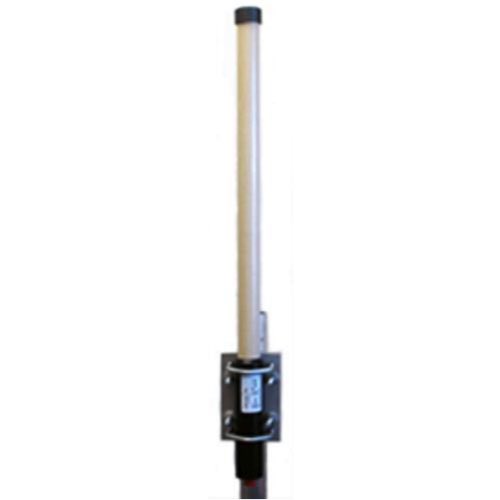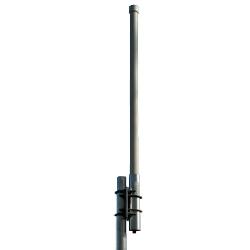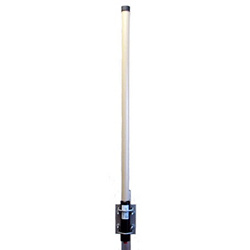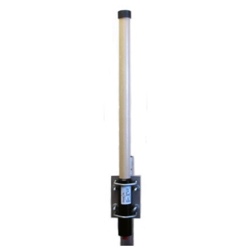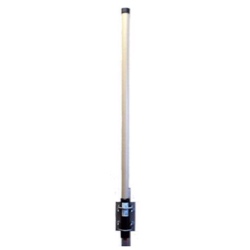

Wavelink Omni Antennas
Wavelink omni antennas provide reliable 360-degree wireless coverage, making them suitable for a variety of applications that call for consistent, all-directional connectivity. The antennas are most commonly utilized in SCADA systems, telemetry networks, and wireless automation setups. With an omnidirectional radiation pattern and, depending on the antenna, anywhere from 3 to 8 dBi gain, Wavelink's omni antennas offer ideal characteristics for a site where multiple devices need to be connected to a centralized communication hub.
Unlike many other antennas, the Wavelink omni antennas have also been constructed to perform in the most demanding environmental conditions. Their rugged design is matched only by the fact that Wavelink has tuned each antenna to work within certain industrial frequency ranges. These devices are made to be easily integrated with wireless radios, modems, and access points, giving them smooth compatibility with the kinds of industrial communication systems.
Overview: AirLink® XR80 Routers
The AirLink® XR80 is a high-performance, rugged 5G/LTE router engineered for mission-critical fixed and mobile applications. Designed to meet the demanding connectivity needs of public safety, utilities, industrial IoT, and fleet operations, the XR80 delivers reliable, always-on communications across multiple networks. With support for single or dual 5G cellular radios and 5×4 MU-MIMO Wi-Fi 6, the XR80 provides exceptional uplink and downlink performance for real-time data, video, and edge computing workloads. Its cartridge-based architecture allows organizations to easily expand or upgrade functionality over time, protecting long-term investments as network requirements evolve.
Built for harsh environments, the XR80 features an IP64-rated rugged enclosure, making it suitable for vehicles, outdoor installations, and industrial sites exposed to dust, vibration, and temperature extremes. Integrated GNSS with dead reckoning ensures accurate location tracking for mobile deployments, even when satellite signals are interrupted. The router runs AirLink OS and integrates seamlessly with AirLink® Complete and ALMS, enabling secure device-to-cloud connectivity, zero-touch provisioning, Out-of-Band management, and simplified remote monitoring. These capabilities help reduce downtime, lower total cost of ownership, and improve operational efficiency. Overall, the AirLink® XR80 is a powerful, flexible connectivity platform ideal for public safety fleets, field service vehicles, fixed wireless access, SCADA systems, manufacturing, utilities, and edge computing applications where performance, reliability, and security are essential.
FAQ: AirLink® XR80 Routers
Q: What is the AirLink® XR80 router?
The AirLink® XR80 is a high-performance, rugged 5G/LTE router designed for both fixed and mobile applications, delivering reliable, secure connectivity for mission- and business-critical networks.
Q: What cellular and wireless technologies does the XR80 support?
The XR80 supports single or dual 5G cellular radios and 5×4 MU-MIMO Wi-Fi 6, providing high-speed, low-latency connectivity across public and private networks.
Q: Can the XR80 be expanded or upgraded over time?
Yes. Its cartridge-based design allows users to add radios and new functionality as needs evolve, extending the device’s service life and protecting long-term investment.
Q: How many Ethernet ports are available on the XR80?
Configurations vary by model: single-5G versions support up to three Ethernet ports, while dual-5G models support up to four, including a 5 Gbps Ethernet port for high-throughput applications.
Q: Is the XR80 suitable for mobile and harsh environments?
Absolutely. The XR80 is IP64 rated, built to withstand vibration, dust, and temperature extremes, making it ideal for vehicles, outdoor installations, and industrial settings.
Antennas: Omni vs Yagi
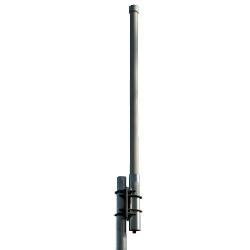
Omni Antennas can pick-up signals coming from all directions. They are most commonly used for signal reception over a large area where the potential location of any incoming signal's transmitter varies. Therefore, unlike Yagi antennas, Omni antennas do not need to be pointed in a particular direction. Each specific antenna has a gain rating or dBi (decibel isotropic) number which coincides with the performance of the antenna. The higher the dBi rating, the larger area covered.
Advantages and Disadvantages
• Easy setup and install
• Can send and receive signals from multiple locations with just one antenna
• Limited on the distance it can communicate
• Not a great option from areas with poor signal strength