

Phoenix Contact Yagi Antennas
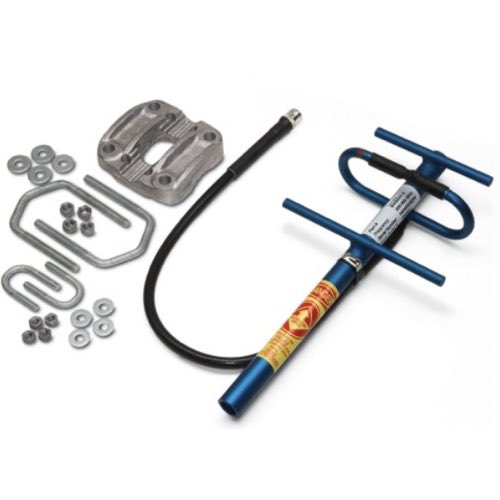
Antennas designed by Phoenix Contact, such as the Yagi antenna, can be employed to reliably and effectively serve as a means of high-gain, directional wireless communication. These antennas are engineered to focus and direct the energy of the radio signals so that the signals travel in a straight line over a much longer distance than they would if they were going in all directions. They can also be used to serve the point-to-multipoint configuration that is employed in many SCADA systems.
Since the Yagi design is a near-optimal way of achieving directivity using elements in a close-packed arrangement, it's also necessary to talk about precision in this construction. And that's to say nothing of the signal path and what must be done in order to minimize loss and maximize gain. These devices are perfectly suited for linking far-flung automated systems, like pump stations, tank farms, and remote sensors, to central control units. That's because they're good at sending focused signals, and when it comes to sending data over long distances with minimal loss, focus is the main thing you want.


FAQs
What are Phoenix Contact Yagi antennas used for?
Phoenix Contact Yagi antennas are designed for long-range, directional wireless communication in industrial automation, SCADA, and remote monitoring systems where reliable connectivity is critical.
What frequency ranges do Phoenix Contact Yagi antennas support?
They are available in multiple frequency ranges, including 900 MHz, 2.4 GHz, and 5 GHz, making them suitable for WLAN, Bluetooth, and proprietary industrial wireless communication systems.
What gain levels are available for Phoenix Contact Yagi antennas?
Depending on the model, Phoenix Contact Yagi antennas typically offer gain values between 6 dBi and 12 dBi, providing strong, focused signals for extended wireless coverage.
Can Phoenix Contact Yagi antennas be used in SCADA systems?
Yes. These antennas are widely used in SCADA applications for water, wastewater, energy, and infrastructure systems where stable, long-distance communication is essential.
Are Phoenix Contact Yagi antennas compatible with other wireless devices?
Yes. They are designed to integrate seamlessly with Phoenix Contact radios and most other industrial wireless devices that operate within compatible frequency bands and use standard connectors.
Why Buy Phoenix Contact Yagi Antennas from RSP Supply
RSP Supply offers genuine Phoenix Contact Yagi antennas engineered for reliable long-range, directional wireless performance in industrial environments. Our selection supports dependable connectivity for remote automation, SCADA, and critical communication systems.