

Phoenix Contact Cellular Antennas
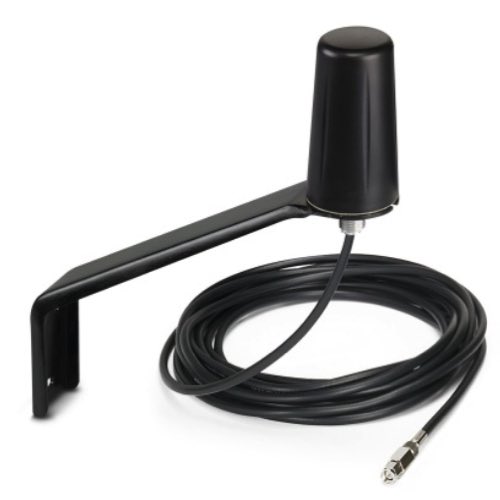
Phoenix Contact cellular antennas are reliably built for industrial conditions, making them an excellent choice where the stable communication necessary for mission-critical control systems, automation networks, gateways, and industrial routers is an absolute necessity. They transmit and receive LTE and 5G digital signals with an uncompromised quality that ensures the controls and systems they serve can do their jobs.
What gives Phoenix Contact antennas their presence in the digital era—a testimony to their industrial strength and reliability in outdoor exposure to sunlight, dust, and vibration—is how well they integrate with the cellular modems, PLCs, and other components of Phoenix Contact’s modular hardware platform. Their designs are straightforward, their tuning is precise, and their construction is robust enough that one would be hard-pressed to find conditions under which they don’t perform reliably if the antennas are just persisting outdoors, maintaining links to cellular towers a long way off.
FAQs
What are Phoenix Contact cellular antennas used for?
They’re designed to improve LTE and 5G connectivity for industrial automation systems, SCADA networks, remote monitoring, and industrial IoT devices.
Are Phoenix Contact cellular antennas compatible with all major carriers?
Yes. Most Phoenix Contact antennas support multi-band LTE and 5G frequencies used by AT&T, Verizon, T-Mobile, and many international networks.
Do Phoenix Contact antennas work only with Phoenix Contact modems?
No. While optimized for Phoenix Contact hardware, they also work with most industrial routers, gateways, and cellular modems that use standard connectors.
Do Phoenix Contact antennas support 5G?
Many newer models support 5G sub-6GHz frequencies along with LTE, making them suitable for modern industrial communication systems.
Can Phoenix Contact cellular antennas help improve weak-signal conditions?
Yes. Their RF tuning and efficient designs help stabilize connections and reduce signal loss in remote or noisy environments.
Why Buy Phoenix Contact Cellular Antennas from RSP Supply
RSP Supply offers Phoenix Contact cellular antennas engineered for dependable 4G and 5G performance in industrial environments. Our selection supports reliable wireless connectivity for automation, monitoring, and IIoT systems.