

Scala Yagi Antennas
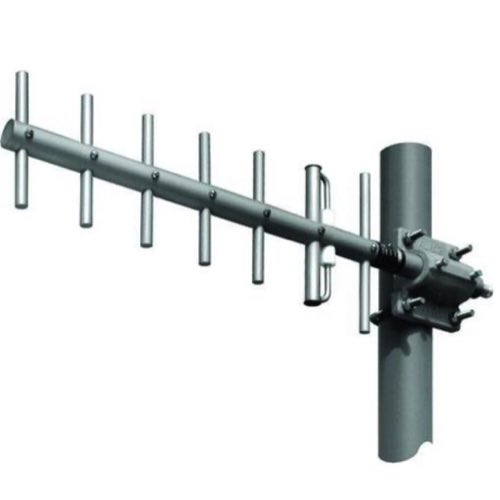
Directional antennas are necessary when the desired path of radio waves is narrow and can be directly focused toward the destination. This makes the Yagi antenna an ideal candidate for such applications. Among the many different designs and forms that a Yagi antenna can take, the Scala Yagi is one of the most well-known and widely used.
Both land mobile radio (LMR) and telemetry applications employ the use of Yagi antennas to for radio communication. When a Yagi antenna is used for such applications, it is performing a backward (or forward) function in that it converts electric signals to magnetic signals that can be better transmitted through space radio waves to a point of reception where they are converted back to electric signals. The Scala Yagi is known for its superior performance characteristics for such applications. First and foremost, it is built extremely well; thus, it can withstand the rigors of the weather as well as the stresses of working its way through temperature variances that a signal must undergo when travelling through different mediums.

FAQs
How do I select the right SCALA antenna for my application?
You’ll want to match the frequency band (e.g., 890-960 MHz), polarization, gain (based on link budget), mechanical mounting (mast diameter, wind survival), and connector/impedance. Also environmental factors (ice, corrosion) matter. SCALA provides data sheets for each model.
What typical applications are SCALA antennas used for and how might that apply to me?
These antennas are used for broadcast (FM, TV), fixed station links, telemetry, industrial communications and other professional RF installations. In your context of industrial automation/remote telemetry (water/wastewater, manufacturing, MCC panel yards, control systems) they could be used for high-reliability wireless links, SCADA systems, remote I/O, fiber‐backup alternatives, etc. The key is they are designed for professional use, not just consumer grade.
What frequency range does the SCALA TY-900 cover?
The SCALA TY-900 is designed for the 890-960 MHz range (professional fixed station applications). It offers broadband support in that region which is suitable for many communications and industrial telemetry uses.
What gain and power handling does the SCALA TY-900 have?
The TY-900 example features around 12.15 dBi gain (for the 7-element version) and a power input rating of ~100 Watts in the spec listing I found. That gives you a sense of its capability for fixed-station links.
What is the SCALA TY-900 construction-quality and suitability for harsh environments?
These SCALA antennas are built with heavy-duty materials: anodized aluminum, robust castings and stainless steel hardware. They are designed for “severe environmental conditions,” excellent for industrial, outdoor mountings.
Why Buy Scala Yagi Antennas from RSP Supply
RSP Supply offers Scala Yagi antennas engineered for reliable long-distance performance in demanding industrial and public safety environments. Our selection supports dependable directional communication where signal strength and consistency are critical.