

Beijer Omni Antennas
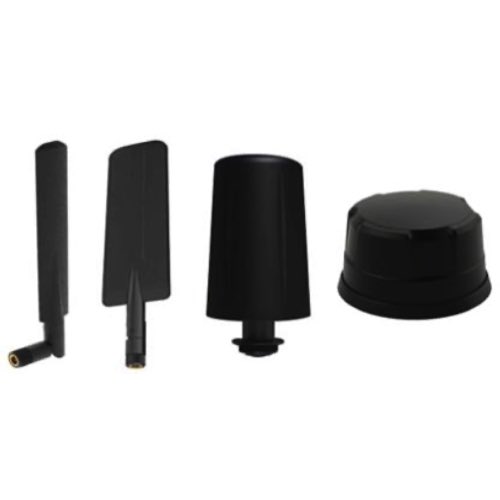
Beijer Omni antennas are designed to provide dependable wireless communication across industrial automation, remote monitoring, and IoT applications where broad signal coverage is important. RSP Supply offers Beijer Omni antennas for systems that rely on consistent 360-degree wireless performance in demanding commercial and industrial environments. These antennas are commonly used in automation networks, utilities, remote installations, and mobile or multi-device communication systems where wide-area signal coverage is preferred over focused directional transmission.
Unlike directional antennas that concentrate signal energy in one direction, Omni antennas radiate and receive signals in all directions around the antenna. This makes them well-suited for applications where devices may be spread across an area or where communication must remain stable as equipment moves or connects from multiple locations. Beijer Omni antennas support modern industrial communication technologies, including 4G LTE, 5G, Wi-Fi, and other IoT-related wireless systems. Their multi-band designs help support compatibility with a wide range of industrial communication platforms and wireless network requirements.
Beijer Omni antennas are built for reliable operation in harsh industrial environments and are often designed with rugged, weather-resistant construction. Many models are intended for outdoor use and offer resistance to UV exposure and environmental conditions commonly found in utility, automation, and heavy industrial settings. With broad coverage, durable construction, and support for modern wireless standards, Beijer Omni antennas help provide practical and reliable connectivity for industrial communication systems that depend on stable, wide-area wireless performance.


FAQs
Q: What are Beijer Omni antennas used for?
Beijer Omni antennas are designed for industrial and commercial wireless communication, providing 360-degree signal coverage for 4G, 5G, Wi-Fi, and IoT connectivity across automation and remote monitoring systems.
Q: What makes an Omni antenna different from a directional antenna?
Unlike directional antennas that focus signals in a single direction, Beijer Omni antennas radiate signals uniformly in all directions, making them ideal for broad coverage in mobile and multi-device environments.
Q: Are Beijer Omni antennas compatible with 4G and 5G networks?
Yes, most Beijer Omni antennas are multi-band designs that support both 4G LTE and 5G frequencies, helping provide stable and future-ready communication.
Q: Do Beijer Omni antennas support Wi-Fi and IoT applications?
Yes, Beijer Omni antennas are engineered for multi-network operation and can support Wi-Fi, Bluetooth, LoRa, and other IoT communication systems depending on the model.
Q: What frequency ranges do Beijer Omni antennas cover?
Beijer Omni antennas typically operate across broad frequency ranges that can cover cellular, Wi-Fi, and industrial wireless bands, depending on the specific model.
Why Buy Beijer Omni Antennas from RSP Supply
RSP Supply offers Beijer Omni antennas for customers who need dependable 360-degree wireless communication in industrial automation, utility, and remote monitoring applications. With antenna options designed for 4G, 5G, Wi-Fi, and IoT systems, customers can source practical solutions for broad coverage and reliable industrial connectivity.