

PULS DC UPS
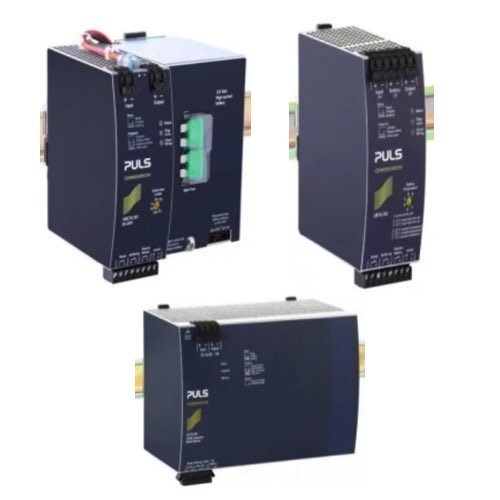
PULS DC UPS systems are designed to maintain uninterrupted 24VDC power for industrial automation, control, and monitoring applications where system reliability is critical. Unlike traditional AC-based UPS solutions, DC UPS systems focus on stabilizing and maintaining DC voltage directly at the load, ensuring seamless power continuity for PLCs, controllers, sensors, and other sensitive electronics during power disruptions.
These compact UPS solutions are well-suited for control cabinets where space is limited and most critical components operate on DC power. PULS DC UPS devices use fast-switching technology to transition to battery operation within milliseconds of a voltage drop, preventing system resets, data loss, or unexpected shutdowns. Advanced battery management and intelligent charging circuits help extend battery life while ensuring rapid recovery after discharge.
PULS DC UPS systems are commonly paired with lead-acid or lithium iron phosphate (LiFePO₄) batteries, allowing flexibility based on application requirements, runtime needs, and environmental conditions. Their high efficiency and robust design make them a dependable choice for industrial environments where maintaining control system uptime is essential.




FAQs
Q: What is a DC UPS system?
A DC UPS system provides backup power directly to DC-powered devices when the primary power source fails, maintaining stable DC voltage for critical loads such as PLCs, controllers, and automation components.
Q: How is a DC UPS different from an AC UPS?
An AC UPS supplies backup power to AC loads and any downstream power supplies, while a DC UPS provides backup only to DC-powered devices connected downstream. DC UPS systems are typically more compact and optimized for control panels with primarily DC loads.
Q: What voltage do PULS DC UPS systems support?
PULS DC UPS systems are designed for 24V DC applications, which are common in industrial automation and control systems.
Q: What type of batteries are used with PULS DC UPS systems?
PULS DC UPS solutions are typically used with lead-acid or lithium iron phosphate (LiFePO₄) batteries, depending on required runtime, maintenance preferences, and installation constraints.
Q: Why is fast switching important in a DC UPS?
Fast switching ensures the system transitions to battery power within milliseconds of a voltage drop, preventing interruptions that could cause control system faults, data loss, or equipment resets.
Why Buy PULS DC UPS Systems from RSP Supply
RSP Supply offers a full range of PULS DC UPS systems designed for industrial automation and control applications. These solutions provide reliable backup power, compact installation, and advanced battery management to support critical DC loads. Customers rely on RSP Supply for access to trusted manufacturers, technical product knowledge, and dependable industrial power solutions tailored to real-world control system requirements.