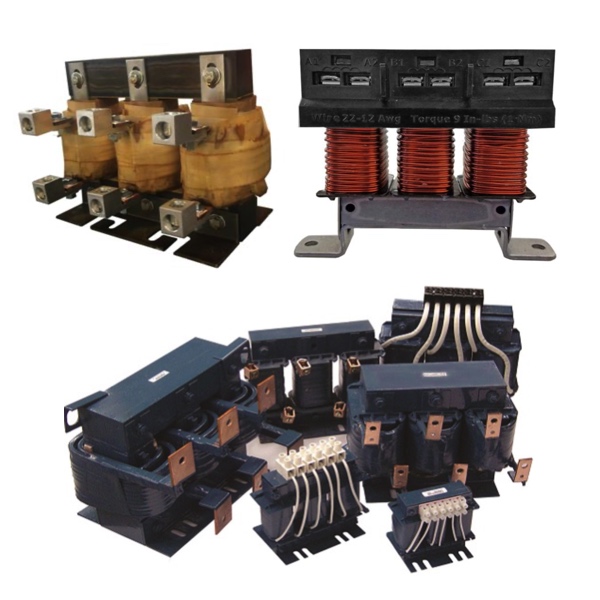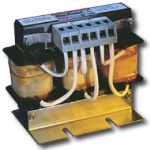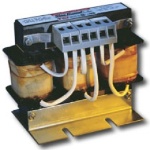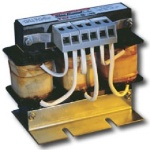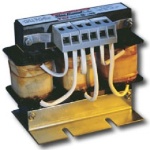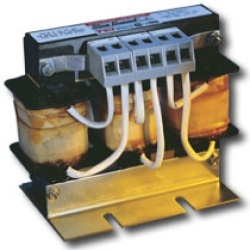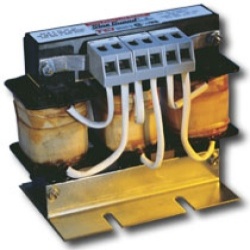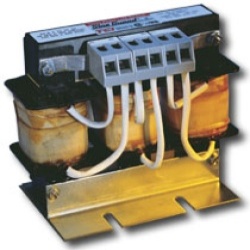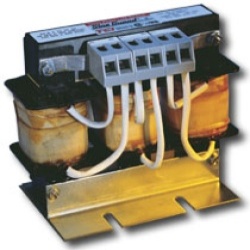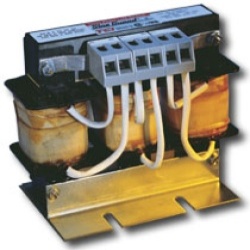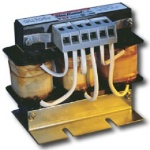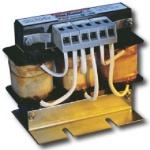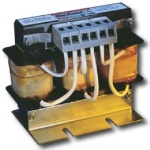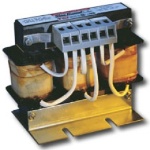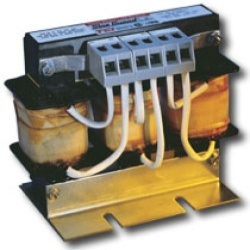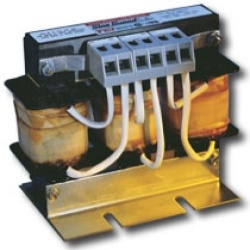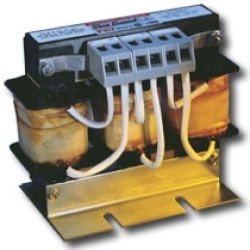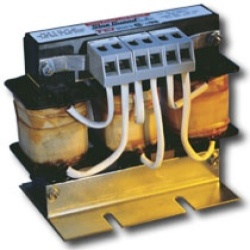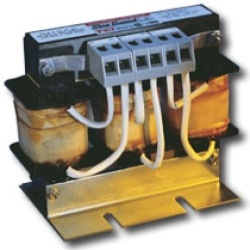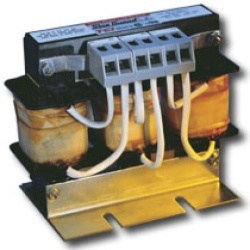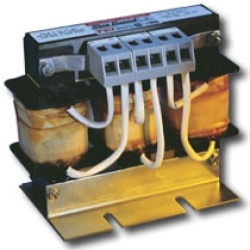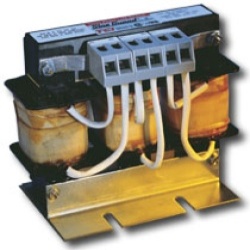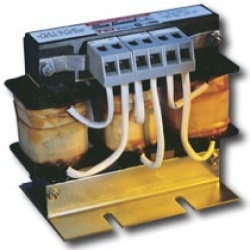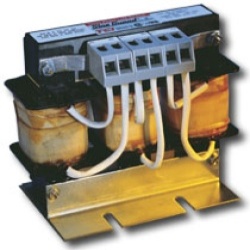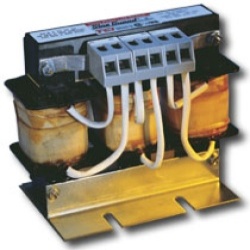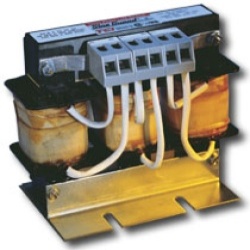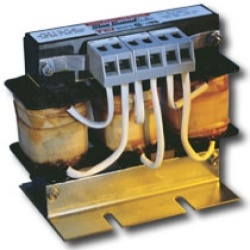

Line Reactors For VFDs

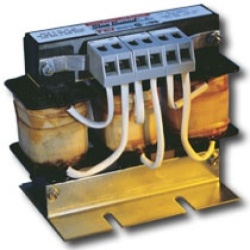
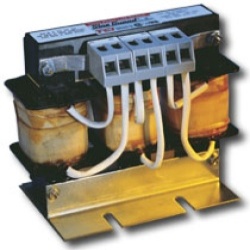
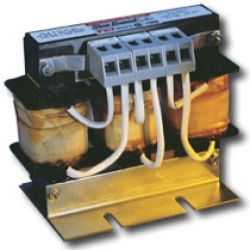
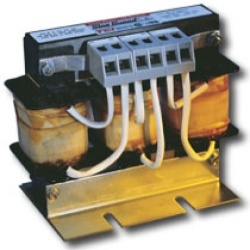
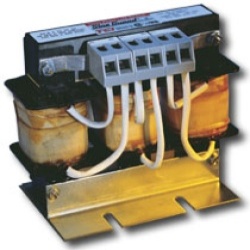
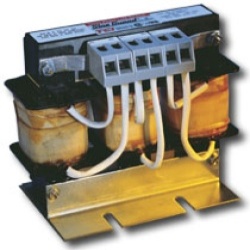
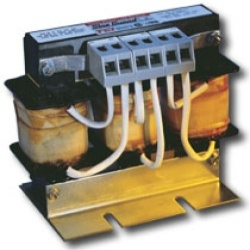
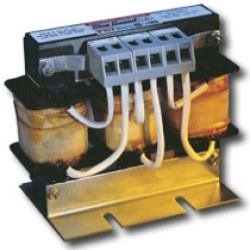
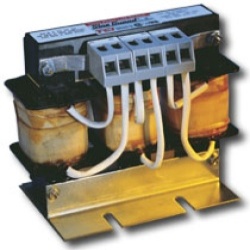
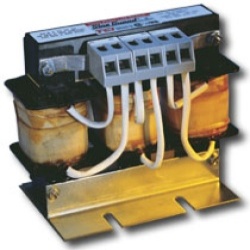
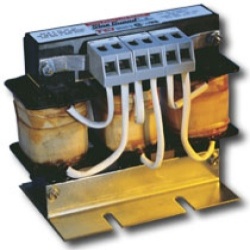
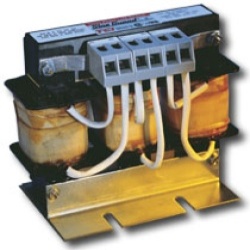
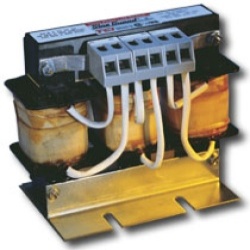
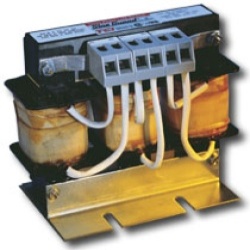
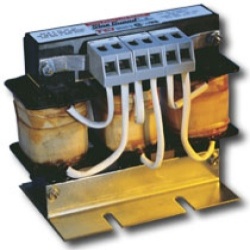
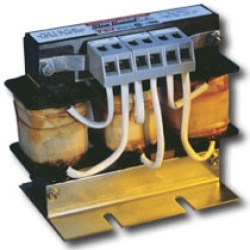
Protecting a variable frequency drive (VFD) from input power line disturbances involves smoothing and slowing down the types of voltage distortions that can happen in power lines. Line reactors do this by controlling the currents into VFDs, controlling the size of inlet currents for a given set of conditions. Higher inlet currents can starve the VFD of essential drive power, especially during high motor current demand situations like startup or acceleration when both current and voltage are at their peak values.

The VFD current waveform is kept stable by the line reactor. Acting as an impedance, it also serves to protect the power supply section of the VFD and reduce the amount of harmonics that commonly plague three-phase systems.

The applied impedance of the VFD line reactor softens and slows down the incoming line voltage distortion, like power system surges and voltage spikes when it's on the input side of a VFD. This is to prevent over-voltage faults in the VFD's inputs. Being on the input side means that it can see all kinds of bad things happening with the line voltage—surgically removing distortions of any kind that might occur within the power system as seen by the VFD.

Found 278 items
Filters (1)
Found 278 items
Manufacturer
Benshaw (153)
Eaton (560)
MTE (565)
TCI (2066)
VFD Filter Protected Side
Line Side (In) (278)
VFD Filter Voltage
230 Volt (96)
460 Volt (182)
VFD Filter Horsepower
0.5 HP (12)
1 HP (12)
2 HP (12)
3 HP (12)
5 HP (12)
7.5 HP (12)
10 HP (12)
15 HP (12)
20 HP (12)
25 HP (12)
VFD Filter Impedance
3% (143)
5% (135)
VFD Filter Enclosure
NEMA 1 (95)
NEMA 3R (88)
Open (95)
Normally In Stock
Toshiba 202413 Line Reactor - 460 Volt, 10 HP, 14 Amp, 3% Impedence, Open
Free U.S Ground shipping
$216.72
$180.60
Normally In Stock
Toshiba 202313 Line Reactor - 230 Volt, 2 HP, 10 Amp, 3% Impedence, Open
Free U.S Ground shipping
$161.28
$134.40
Normally In Stock
Toshiba 202407 Line Reactor - 460 Volt, 0.5 HP, 1.6 Amp, 3% Impedence, Open
Free U.S Ground shipping
$100.80
$84.00
Normally In Stock
Toshiba 202496 Line Reactor - 460 Volt, 0.5 HP, 1.6 Amp, 5% Impedence, Open
Free U.S Ground shipping
$105.84
$88.20
Normally In Stock
Toshiba 202312 Line Reactor - 230 Volt, 1 HP, 5.5 Amp, 3% Impedence, Open
Free U.S Ground shipping
$146.16
$121.80
Normally In Stock
Toshiba 202360 Line Reactor - 230 Volt, 1 HP, 5 Amp, 5% Impedence, Open
Free U.S Ground shipping
$151.20
$126.00
Normally In Stock
Toshiba 202408 Line Reactor - 460 Volt, 1 HP, 2.3 Amp, 3% Impedence, Open
Free U.S Ground shipping
$115.92
$96.60
Normally In Stock
Toshiba 202412 Line Reactor - 460 Volt, 7.5 HP, 11 Amp, 3% Impedence, Open
Free U.S Ground shipping
$171.36
$142.80
Normally In Stock
Toshiba 202314 Line Reactor - 230 Volt, 3 HP, 12 Amp, 3% Impedence, Open
Free U.S Ground shipping
$181.44
$151.20
Normally In Stock
Toshiba 202411 Line Reactor - 460 Volt, 5 HP, 8.2 Amp, 3% Impedence, Open
Free U.S Ground shipping
$161.28
$134.40
Normally In Stock
Toshiba 202499 Line Reactor - 460 Volt, 3 HP, 5 Amp, 5% Impedence, Open
Free U.S Ground shipping
$156.24
$130.20
Normally In Stock
Toshiba 202498 Line Reactor - 460 Volt, 2 HP, 4.2 Amp, 5% Impedence, Open
Free U.S Ground shipping
$151.20
$126.00
Normally In Stock
Toshiba 202362 Line Reactor - 230 Volt, 3 HP, 11 Amp, 5% Impedence, Open
Free U.S Ground shipping
$191.52
$159.60
Normally In Stock
Toshiba 202361 Line Reactor - 230 Volt, 2 HP, 10 Amp, 5% Impedence, Open
Free U.S Ground shipping
$171.36
$142.80
Normally In Stock
Toshiba 202311 Line Reactor - 230 Volt, 0.5 HP, 5 Amp, 3% Impedence, Open
Free U.S Ground shipping
$131.04
$109.20
Normally In Stock
Toshiba 202359 Line Reactor - 230 Volt, 0.5 HP, 3.4 Amp, 5% Impedence, Open
Free U.S Ground shipping
$131.04
$109.20
Normally In Stock
Toshiba 202409 Line Reactor - 460 Volt, 2 HP, 4.2 Amp, 3% Impedence, Open
Free U.S Ground shipping
$131.04
$109.20
Normally In Stock
Toshiba 202410 Line Reactor - 460 Volt, 3 HP, 5 Amp, 3% Impedence, Open
Free U.S Ground shipping
$146.16
$121.80
Normally In Stock
Toshiba 202497 Line Reactor - 460 Volt, 1 HP, 2.3 Amp, 5% Impedence, Open
Free U.S Ground shipping
$152.48
$127.07

More Information about Line Reactors

Line Reactor vs Load Reactor

A Line reactor (input reactor) is installed on the input side of a VFD, between the power supply and the drive. Its primary function is to protect the VFD from disturbances in the power supply, such as voltage spikes, harmonics, and transient surges. A Load reactor (output reactor) is installed on the output side of the VFD, between the drive and the motor. Its primary role is to protect the motor from the effects of the high-frequency switching output of the VFD, such as voltage spikes and reflected waves. 

FAQs

Do line and load reactors protect devices from power surges and transients as well as harmonic distortion?

Yes, line reactors primarily protect VFDs from power surges, transients, and harmonic distortion on the input side, while load reactors protect motors from transients, voltage spikes, and harmonic distortion on the output side.

Inductive Load Basics

Electrical load is an electrical component or portion of a circuit that consumes electrical power. For example, a power source such as a battery or generator will have a load which consumes that power, such as a light bulb, motor or television. 

There are three types of electrical loads: capacitive loads, resistive loads and inductive loads 

Capacitive and Resistive Loads

Capacitive loads are similar to inductive loads in that the current and voltage are out of phase with one another, however, capacitive loads see the current reach its maximum before the voltage, while inductive loads see the voltage reach its maximum before the current. Resistive loads typically consist of things like heating elements.

Inductive Loads

Inductive loads use a coil to produce a magnetic field. The most common types of inductive loads are motors, fans, blenders and pumps. Inductive loads resist change in current, which lags behind the voltage. There are two different types of power with inductive loads. There is real power, which is based off of the work that is actually being done by the motor and there is reactive power, which is the power that is drawn from the power source to produce the magnetic field. The total power of an inductive load combines both the real power and reactive power.